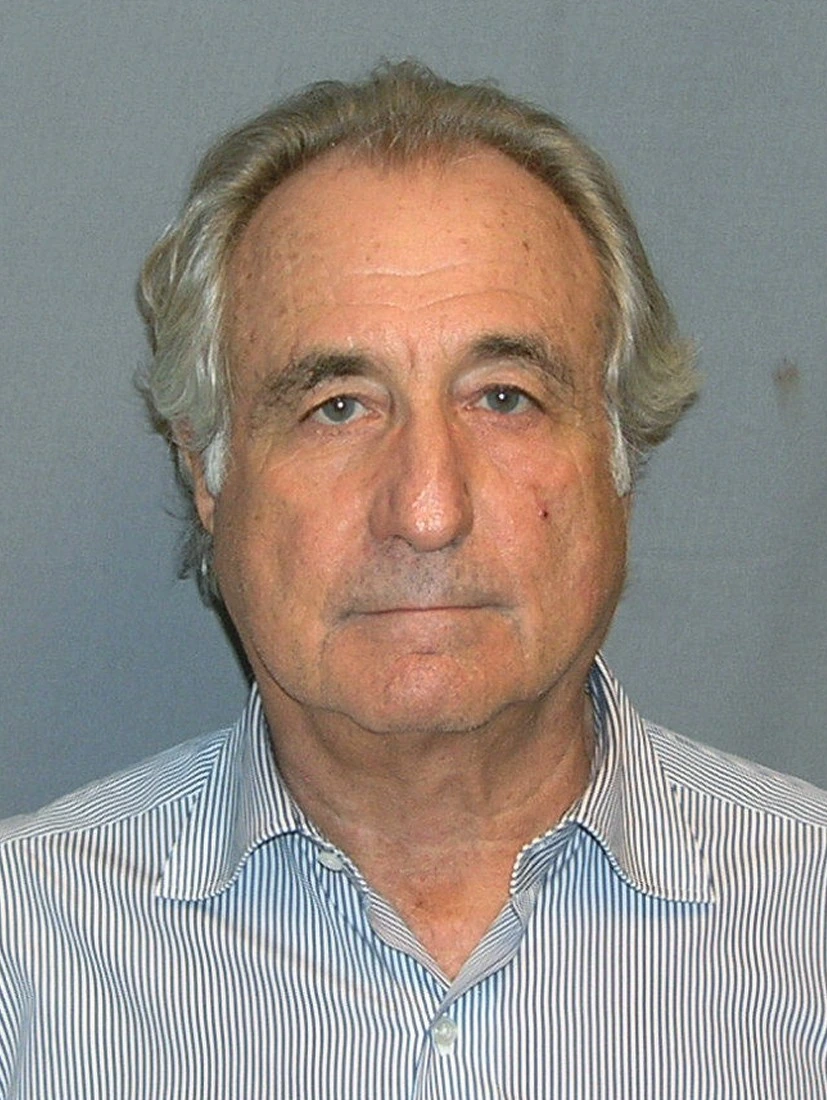
Bernie Madoff's peak net worth is most reliably estimated in the range of $823 million to $826 million in documented personal and marital assets, based on court filings made just before his 2009 sentencing. That number is far smaller than the figures you'll see thrown around online, and understanding why requires separating three very different things: his personal wealth, his firm's reported assets under management, and the criminal forfeiture figures attached to his case. Get those mixed up and you'll walk away thinking Madoff was worth $170 billion, which is not what that number means.
Madoff Net Worth Peak: How to Estimate the Highest Figure

Marcus Holloway
9 Apr 2026
What 'peak net worth' actually means here

Net worth, in the standard sense used on a reference site like this one, means total assets minus total liabilities for an individual. Peak net worth means the highest that figure is estimated to have been at any point in that person's life, usually right before a collapse, scandal, or financial reversal. For Madoff, 'peak' is generally understood to mean the period just before his December 2008 arrest, when his firm was still operating and his personal holdings had not yet been seized.
The complication with Madoff is that almost nothing about his financial picture was straightforward. His entire business was a fraud, which means the paper values of accounts he managed were fiction. His personal wealth, though substantial, was intertwined with a firm that collapsed overnight. So 'peak' is a bit of a moving target: it could mean peak personal assets before seizure, peak reported AUM at the firm, or the peak figures attached to forfeiture orders. All three of those produce wildly different numbers, and all three get quoted as 'Madoff's net worth' in various places online.
Why AUM and personal wealth get confused so often
This is the core confusion in almost every inflated Madoff net worth claim. Assets under management (AUM) is the total value of client money a firm manages on behalf of investors. It is not the manager's personal money. When Madoff's firm collapsed, DOJ records show that on paper it reportedly had more than $65 billion in client assets, even though its Forms ADV disclosed only $17.1 billion in AUM. Neither figure represents Bernie Madoff's personal wealth. They represent what clients thought they had in their accounts. Because the entire enterprise was a Ponzi scheme, even the $65 billion figure was fictional: it included decades of fabricated returns that never existed.
This distinction matters enormously for anyone researching Bernie Madoff's net worth from a financial research perspective. AUM figures describe the scale of the fraud, not the wealth of the individual. Personal net worth would be calculated from Madoff's own real estate holdings, bank accounts, investment accounts, personal securities, business equity, and similar documented assets, minus any liabilities. Those are not the same thing, and conflating them is how you end up with headlines claiming Madoff was worth tens of billions when the court record tells a very different story.
How net worth estimates are actually built from public records

For any public figure, credible net worth estimation starts with documented sources: property records, SEC filings, bankruptcy documents, court orders, and credible investigative reporting. For Madoff specifically, the most reliable anchor point comes from pre-sentencing court filings. Reuters reported in 2009 that court papers listed Madoff and his wife Ruth's combined net worth between $823 million and $826 million at that time, based on frozen personal assets. That's a factual range from an actual court document, which makes it far more reliable than any back-of-the-envelope figure derived from AUM or forfeiture amounts.
Beyond that filing, researchers typically look at: known real estate holdings and their assessed values, known bank and brokerage accounts referenced in court proceedings, business equity interests that could be assigned a value, and proceeds from asset sales or auctions that took place during liquidation. The Securities Investor Protection Act (SIPA) liquidation process, overseen by a court-appointed trustee, generated substantial public documentation about what assets existed and what they were worth when sold. That record is one of the most reliable inputs available for estimating what Madoff actually owned.
What commonly goes wrong in published estimates is that writers grab the largest number in a press release, usually a forfeiture figure, and treat it as personal wealth. Or they cite the $65 billion in fictional client account balances as if it were Madoff's money. Neither approach reflects sound estimation methodology.
What we know about Madoff's wealth at peak, and why values vary
The most defensible peak net worth range for Bernie Madoff is approximately $823 million to $826 million, based on the court-filed documentation of his and Ruth's personal assets just before sentencing. Some estimates run higher, into the low billions, if you include estimates of assets that may have been transferred or otherwise moved in the period before the arrest. Some estimates run lower if you strip out Ruth Madoff's separately negotiated settlement terms, which allowed her to retain approximately $2.5 million at the time. The honest answer is that no single number is fully settled, and any figure above roughly $1 billion in personal net worth requires assumptions that go beyond what the public record clearly supports.
It's also worth looking at the broader family picture. Madoff's firm was a family operation in many ways, with his brother Peter serving as chief compliance officer and his sons Andrew and Mark also holding positions there. Understanding how wealth moved through that structure matters for anyone trying to build a complete picture. Separate research into Peter Madoff's net worth today and Andrew Madoff's net worth provides useful context about how family members fared individually after the collapse and what the public record says about their own assets.
There is also a separate entity sometimes referenced: Jeffrey Madoff, a filmmaker and marketing figure who shares the surname but is not a close relative of the convicted fraudster. Searches occasionally conflate the two, so if you come across references to Jeffrey Madoff's net worth, it's worth confirming which person is being discussed before drawing any connections to the fraud.
The collapse and what it did to the net worth picture

Once Madoff was arrested in December 2008, the financial picture changed rapidly and dramatically. The DOJ described the case as involving the freezing of corporate and personal assets as part of the criminal process. Judge Denny Chin ruled in June 2009 that Madoff would be required to forfeit $170 billion, described as eliminating his interest in all real estate, investments, and other property. That forfeiture order also addressed Ruth Madoff's situation separately.
It's critical to understand what that $170 billion figure actually represents. It is a criminal forfeiture money judgment, not a statement that Madoff personally possessed $170 billion. Reuters' republished factbox explains that the $170B forfeiture figure is [symbolic](https://www. investing.
com/news/equities-news/factbox-the-numbers-behind-the-madoff-fraud-68209), reflecting proceeds connected to the fraud rather than what Madoff personally possessed, and it provides context on the Ponzi scheme's scale. Under 18 U. S. C.
§ 982, the government can seek forfeiture of property involved in or traceable to money-laundering offenses, including proceeds traceable to the offense. When specific forfeitable assets aren't available or can't be identified, courts can issue a money judgment for the amount of proceeds that flowed through the scheme. A later DOJ filing referenced forfeiture money judgments totaling more than $177 billion in connection with the broader case.
These numbers describe the scale of the fraud's cash flows, not Bernie Madoff's personal balance sheet.
The SIPA liquidation process, run by court-appointed trustee Irving Picard, has recovered billions for victims over many years. A tenth distribution provided over $4 billion in nearly full recovery to more than 40,000 victims through civil forfeiture recoveries. Notably, approximately $2.2 billion of recovered funds came from the estate of Jeffry Picower, a major Madoff investor, illustrating that large recovery figures can include money returned by third parties rather than assets seized directly from Madoff himself. All of this is tracked on the Madoff Trustee's site, which remains the most authoritative ongoing source for liquidation and recovery data.
For a fuller account of how the collapse reshaped the entire family's financial standing, the article on Madoff family net worth pulls together what's known about combined family holdings and how those changed before and after the fraud came to light.
A comparison of the key figures people cite
| Figure | Amount | What it actually represents | Reliability for 'net worth' purposes |
|---|---|---|---|
| Disclosed AUM (ADV filing) | $17.1 billion | Client assets reported to regulators | Not personal wealth; regulatory disclosure only |
| Alleged AUM at collapse | $65 billion+ | Fictitious client account balances including fabricated returns | Not personal wealth; largely invented |
| Court-documented personal assets | $823M to $826M | Madoff and Ruth's frozen assets per court papers | Best available estimate of actual personal net worth |
| Criminal forfeiture money judgment | $170 to $177+ billion | Proceeds of money-laundering offense (legal forfeiture figure) | Not personal net worth; reflects fraud cash flows |
| Total victim recovery (trustee) | $4 billion+ | Distributions to victims from liquidation and civil forfeitures | Recovery metric, not Madoff personal wealth |
The takeaway from this table is straightforward: if you're looking for peak personal net worth, the $823 million to $826 million range from actual court filings is your best anchor. Every other large number describes something else entirely.
How to verify and cross-check sources yourself
If you want to dig into the primary sources rather than taking any single site's word for it, here is a practical checklist of where to look and what to search for.
- Search the DOJ SDNY case page for 'United States v. Bernard L. Madoff' to find the original plea documents, forfeiture applications, and press releases. The June 12, 2009 press release specifically addresses the AUM discrepancy and fraud scale.
- Search for the court document designated as Document 53 in the Madoff plea case (SDNY), which contains the forfeiture money judgment language explaining the $170.25 billion figure and its legal basis.
- Visit the Madoff Trustee's official website (run by Irving Picard's office) and look at the 'Major Court Decisions' section for the Net Investment Method rulings and ongoing distribution updates.
- Search for 'Madoff restitution impracticability motion 2012' in DOJ SDNY filings to find documents discussing the $177+ billion forfeiture money judgment framing and how the government managed distribution.
- Look up the Reuters or Stabroek News 2009 coverage citing the $823 million to $826 million court-paper range for Madoff and Ruth's personal assets, which is the most grounded personal net worth figure.
- For ongoing recovery data, search DOJ OPA (Office of Public Affairs) press releases for 'Madoff distribution' to find the most recent victim compensation updates, which show total recovery amounts over time.
- Cross-reference any estimate you find against the SIPA liquidation framework: if a number doesn't trace back to court filings, the trustee's reports, or documented asset sales, treat it as unverified.
How to read net worth numbers responsibly
Net worth figures on any reference site, including this one, are estimates built from publicly available information. They are not audited financial statements. For a figure like Madoff's peak net worth, the honest position is to present a range, explain what documents that range comes from, and be explicit about what is and isn't included. A responsible estimate would note that the $823 million to $826 million figure reflects court-filed frozen assets at a specific point in time, that some assets may have been transferred or spent before the arrest, and that the true peak could have been somewhat higher in earlier years when the fraud was less exposed.
The trustee's Net Investment Method, used to calculate victim claims, is also worth understanding as a framework for thinking about what 'real' money looked like in the Madoff case. Rather than using the fictitious final account statement balances, the trustee calculated net equity by crediting cash deposited minus cash already withdrawn. This approach was designed to prevent fabricated returns from inflating customer claims and to allocate real assets to real losses. It's the same kind of logic you should apply when evaluating any net worth figure tied to Madoff: strip out the fiction and focus on documented cash flows and documented asset holdings.
One more practical note: net worth estimates on this type of site are not static. As liquidation proceedings close, as court documents become public, and as auction results are recorded, the underlying data changes. Treat any figure as a snapshot tied to a methodology and a date, and always check whether the source you're reading reflects the most current available information. With a case as complex and well-documented as Madoff's, the primary source trail is rich enough that you don't have to rely on guesses. The court record is there. Use it.
FAQ
If $823 million to $826 million is the best anchor, why do some credible sites still quote higher “net worth” numbers?
Those higher figures usually come from different “definitions” of net worth (for example, adding estimated value of assets that may have been transferred before the arrest, or using liquidation/forfeiture-linked valuations rather than the pre-sentencing frozen-asset snapshot). Without matching the underlying document set and date, the numbers are not directly comparable.
What’s the most common mistake people make when they see the $170 billion forfeiture figure?
They treat a forfeiture money judgment as if it were money Madoff personally held at once. In reality, it is a court-ordered amount tied to forfeitable proceeds and traceability rules, and it can exist even when the specific cash or assets are not directly available.
Should I use AUM or Forms ADV when trying to estimate madoff net worth peak?
No, AUM and Forms ADV are measures of customer account balances, not the manager’s personal assets. For net worth peak, prioritize documented personal holdings (property, brokerage/bank accounts referenced in filings, business equity) and liabilities referenced alongside them.
How do transfers between Madoff and family members affect “peak” estimates?
Transfers can make a court-filed frozen-asset range underestimate earlier peak holdings. If assets were moved, spent, or structured to reduce seizure risk before the arrest, researchers may need to treat the frozen-assets range as a lower bound and only adjust it when specific transaction documentation supports the change.
How can I tell whether an online “net worth” claim is conflating the fraudster with someone else who shares the surname?
Check first-person identifiers (middle name, location, known family members, and career details) and the timeline. The article flags a common edge case, Jeffrey Madoff, whose public profile can lead to mix-ups that look convincing in search results but refer to a different person.
Does Ruth Madoff’s separate handling change the way I should interpret the peak net worth range?
Yes. Some estimates adjust the combined figure based on Ruth’s separately negotiated settlement terms, which can change what fraction of the combined court-anchored range is attributed to each person. If you see a single number without explaining whether it is combined or separated, treat it cautiously.
Why do “peak” calculations sometimes differ slightly within the same court filing range?
Even within a fixed filing window, asset valuations can reflect assessed values, appraisals, or book values, and some liabilities may be listed in different ways across documents. Small discrepancies can also come from whether researchers include specific business equity or only directly named accounts.
What should I look for to verify whether an estimate used liquidation evidence correctly?
Look for references to the SIPA process, trustee reporting, and sale or auction outcomes for specific asset classes (real estate, securities holdings, and similar items). A valid approach will explain whether it is using cash recovery, liquidation proceeds, or estimated market values, because those are not the same thing as pre-seizure personal net worth.
If I’m building my own estimate, what is the practical workflow to avoid mixing “real money” with “paper account” values?
Start with documented personal asset listings from court records, subtract documented liabilities, then separately note any AUM or client-balance figures as indicators of fraud scale, not wealth. Finally, label the result as “snapshot as of (date/document)” and record which assets were definitely included versus only hypothesized.
Are net worth estimates for Madoff considered “audited” numbers at any point?
No. The article notes these are estimates based on public records, not audited financial statements. The best you can do is anchor to court-ordered snapshots and liquidation documentation, then be explicit about what is included, what is missing, and what assumptions would be required to go beyond the record.