
The Marquess of Cholmondeley net worth is estimated at roughly £100 million to £150 million as of 2025, though that range reflects the deep uncertainty that comes with valuing a private aristocratic estate rather than a publicly traded portfolio. The title is currently held by David George Philip Cholmondeley, the 7th Marquess, and the wealth tied to it sits primarily in land, two historic family seats, and a long history of managing (and at times selling off) significant art and heirloom collections.
Marquess of Cholmondeley Net Worth Estimate and How It’s Calculated

Marcus Holloway
1 May 2026

Who exactly is the Marquess of Cholmondeley

David Cholmondeley (born 1960) has held the 7th Marquessate since 1990, when he inherited it from his father. Before that, he was styled Viscount Malpas from birth through 1968, then Earl of Rocksavage until his father's death. The title itself is part of the Peerage of the United Kingdom and comes bundled with a set of associated titles: Earl of Cholmondeley, Viscount Cholmondeley, and others that have accumulated over centuries of family history.
One quick note on spelling: the family name is pronounced roughly 'Chumley' in spoken English, which is why you'll sometimes see it written as 'Chomondeley' or similar variations in casual searches. For research purposes, 'Cholmondeley' is the correct form, and that's the spelling used in official records, Companies House filings, and parliamentary registers. If you've been searching under a variant spelling and getting thin results, that's likely why.
The family's two principal seats are Houghton Hall in Norfolk (the current residence of the 7th Marquess and now an operating visitor attraction with a sculpture park and walled garden) and Cholmondeley Castle in Cheshire, set within a large agricultural estate near Malpas. Both properties are central to any net worth discussion because they represent the bulk of the family's asset base.
What 'net worth' actually means for titled British nobility
Estimating net worth for a British peer is fundamentally different from doing the same for, say, a tech founder with public equity stakes or a celebrity with disclosed contracts. There are no mandatory wealth disclosures, no SEC filings, and no quarterly earnings reports. What researchers and databases (including this site) work with instead is a combination of land registry data, charitable trust accounts, Companies House filings, inheritance tax disclosures, reported property transactions, auction records, and periodical rich-list estimates.
The Sunday Times Rich List has historically been the most cited public benchmark for UK aristocratic wealth. Its 2008 edition, for example, placed the Marquess of Cholmondeley at approximately £60 million, with that figure attributed mainly to inherited landholdings. Older figures like that one circulate widely in secondary sources and can misrepresent current wealth if repeated without updating. Land values in England have roughly doubled since 2008 in many categories, which is part of why current estimates sit considerably higher than that older benchmark.
When we build an estimate here, the methodology layers publicly available information: acreage data from sources like Who Owns England, estate-linked entity filings (Companies House and the Charity Commission), auction records for art and heirlooms, publicly reported inheritance events, and any documented capital transactions like property sales. The result is a range rather than a single figure, and that range reflects genuine uncertainty rather than lazy hedging.
The best available net worth estimate and what's behind it
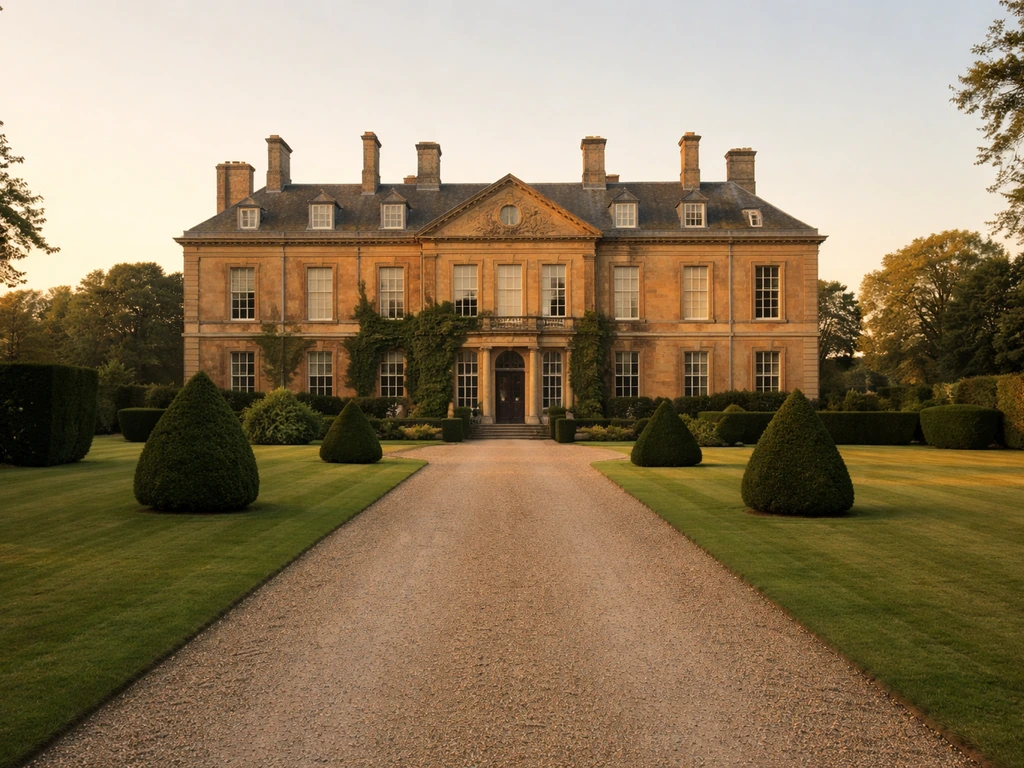
Working from available data as of early 2025, a reasonable estimated net worth range for David Cholmondeley, 7th Marquess of Cholmondeley, is £100 million to £150 million. In late 1990s and early 2000s reporting, The Independent described how the National Gallery bought the Holbein painting “Lady with a Squirrel” for £10 million in 1992 and how a 1994 Christie’s sale raised around £21 million to meet inheritance-tax costs blank" rel="noopener noreferrer">£10m art. You can use the same approach to understand reported estimates for the Champalimaud net worth as well net worth range. That range is driven primarily by land and estate valuations rather than liquid assets. Here's what feeds into that figure: A Guardian report on Christie's and the seller being the Marquess of Cholmondeley describes a legal dispute linked to family treasures sold in December 1994 to help meet costs of Houghton Hall a legal dispute involving Christie's and the seller being the Marquess of Cholmondeley.
- Houghton Hall (Norfolk): a Grade I listed country house set within extensive parkland, including a walled garden remodelled in 1991 and opened to the public in 1996, plus the ongoing sculpture park. Country houses of this scale and condition in prime rural Norfolk routinely carry valuations in the tens of millions of pounds for the property alone, before land is factored in.
- Cholmondeley Castle (Cheshire): a substantial estate near Malpas with predominantly agricultural land use. Agricultural land in Cheshire has been valued at £8,000 to £15,000 per acre in recent years depending on quality and access.
- Art and heirloom collections: the family has historically held significant collections. The National Gallery purchased the Holbein 'Lady with a Squirrel' for £10 million in 1992, and a Christie's sale in 1994 reportedly realised around £21 million, both connected to inheritance tax obligations after the 6th Marquess died in 1990. Vanity Fair reported the 7th Marquess putting approximately $23 million worth of art and heirlooms up for sale at Christie's, described as supporting the long-term future of Houghton Hall. Remaining collections held in trust or personally could be substantial, though they are structurally harder to value.
- Trust and charitable structures: The Cholmondeley Gardens Trust (registered charity) holds and manages garden assets at both properties, which means some asset value sits off the personal balance sheet in charitable structures.
- Agricultural income and tenant activity: the Cheshire estate generates agricultural lease and tenancy income, and estate-linked businesses include Cholmondeley Castle Farm Shop Ltd (Companies House number 14586401).
It is worth being direct: no independently verified figure for the 7th Marquess's personal net worth exists in the public domain as of May 2026. Because there is no verified public figure, people sometimes search for the mit monk net worth, but any number you see is likely an estimate rather than confirmation. If you're specifically looking for Peter Mondavi net worth figures, keep in mind that independent, verifiable disclosures are often missing for private individuals personal net worth. The £100 million to £150 million range is a research-based estimate compiled from the asset classes above. Readers should treat it as a well-grounded approximation, not a certified valuation.
The main wealth drivers in this context
British aristocratic wealth at this tier almost always has the same basic architecture: the bulk of the asset base is illiquid and generational. Understanding that architecture helps interpret any estimate you encounter.
| Asset Class | Examples in Cholmondeley Context | Valuation Approach | Liquidity |
|---|---|---|---|
| Land and farmland | Cholmondeley Castle estate (Cheshire), Houghton Hall parkland (Norfolk) | Per-acre market values from land registry and agricultural reports | Low (illiquid, long-term holds) |
| Historic properties | Houghton Hall, Cholmondeley Castle | Comparable sales for Grade I/II listed country houses | Very low (specialist market, major transaction costs) |
| Art and heirlooms | Holbein sold 1992; Christie's sale 1994; Vanity Fair-reported sale | Auction records, insurance valuations | Medium (saleable but subject to heritage restrictions) |
| Trust/charitable assets | Cholmondeley Gardens Trust | Charity Commission accounts | Very low (restricted use) |
| Operating businesses | Cholmondeley Castle Farm Shop Ltd, visitor revenue at Houghton Hall | Revenue multiples, Companies House accounts | Medium (ongoing income generation) |
| Investments | Not publicly disclosed | Estimated from income patterns if reported | Variable |
Income streams are not the same as net worth

This distinction trips up a lot of readers. Net worth is a snapshot of total assets minus total liabilities at a given moment. Income is what flows in year by year. For the Marquess of Cholmondeley, the income picture likely includes visitor admission and event revenue from Houghton Hall, agricultural rents and lease income from the Cheshire estate, income from estate-linked commercial operations like the farm shop, and possibly dividends or investment returns from private holdings. None of these income streams are publicly disclosed in detail, but they are separate from (and far smaller than) the headline asset valuation.
Where you see websites claim something like 'the Marquess earns X per year,' treat that figure with heavy skepticism unless it cites a specific, verifiable source. Annual income from operating an historic estate is typically modest relative to the capital value locked up in the land and buildings. Houghton Hall's ongoing sculpture park and cultural program, for example, represent both a revenue stream and a significant ongoing capital outlay that can suppress net cash flow even while the underlying asset appreciates.
What can shift the estimate over time
Several factors regularly move net worth estimates for titled landowners, and the Cholmondeley case illustrates most of them well.
- Inheritance and succession events: the transition from the 6th to the 7th Marquess in 1990 triggered significant inheritance tax obligations, forcing the acceptance-in-lieu arrangements (the Holbein sale, the Christie's auction) that reduced the estate's art holdings by tens of millions of pounds. Future succession events could do the same.
- Property sales: if either Houghton Hall or the Cheshire estate (or portions of them) were sold, the net worth figure could shift dramatically in either direction depending on debt structure and tax treatment.
- Art market movements: remaining collection pieces are subject to market cycles. A significant piece selling at auction updates the estimate; a piece being donated or accepted in lieu by a museum reduces the asset base.
- Land value changes: UK agricultural and rural land values have been volatile, influenced by subsidy policy (particularly post-Brexit), planning permissions, and environmental land management schemes. A 20% swing in farmland prices directly moves the headline estimate.
- Estate maintenance capital expenditure: Houghton Hall's walled garden remodelling in 1991, the ongoing sculpture park investment, and the general upkeep of two Grade I listed properties represent significant capital drains that can reduce net worth over time without showing up in any public report.
- Charitable trust activity: transfers of assets into or out of The Cholmondeley Gardens Trust affect what sits on versus off the personal balance sheet, changing the personal net worth figure without any actual sale.
- Tax and regulatory changes: UK inheritance tax reform, capital gains changes, and agricultural property relief adjustments (currently under political discussion) can materially affect what heirs retain after future succession events.
How to verify this and avoid bad sources
Net worth research for UK aristocracy attracts a lot of low-quality content: pages that copy old Sunday Times Rich List figures without updating them, sites that conflate annual income with total wealth, and articles that present speculation as fact. Here is a practical checklist for cross-checking any figure you find, including ours.
- Check the date: any estimate from before 2020 is likely significantly out of date given land value movements alone. The 2008 Sunday Times figure of £60 million, for instance, reflects pre-financial crisis land prices and a reduced art collection post-1994 sales.
- Look for asset-level sourcing: credible estimates will point to specific asset classes (land, property, art) rather than just producing a round number. If a source says '£X million' with no breakdown, treat it as unverified.
- Cross-check the Charity Commission: search 'Cholmondeley' on the Charity Commission register. The Cholmondeley Gardens Trust files accounts with a year-end of 31 March and submitted its most recent accounts in January 2025. These accounts give some indication of how estate-linked assets are managed.
- Search Companies House: the GOV.UK company search for 'Cholmondeley' returns registered entities including Cholmondeley Castle Farm Shop Ltd. The filings won't tell you personal net worth, but they confirm active estate operations and give revenue context.
- Verify parliamentary disclosures: the House of Lords Register of Interests (available on parliament.uk) records the Marquess's declared interests and directorships. This is useful for confirming roles, not for calculating wealth.
- Use the National Archives for historical context: the Cholmondeley family papers held by the National Archives include estate income/expenditure material that can inform the historical size and structure of the estate.
- Avoid aggregator sites that lack methodology pages: sites that list a net worth without explaining how they arrived at it are almost always recycling an old figure from a secondary source without verification.
- Treat rich-list figures as floor estimates: Sunday Times Rich List figures for landowners tend to be conservative because land is notoriously hard to value at scale. If the Rich List said £60 million in 2008, the actual figure was probably at least that, and the current figure is likely higher.
Putting this in context with similar wealth profiles
Wealth profiles built around inherited estates and titled peerages share a common structure that is worth understanding as a category. Unlike entrepreneurs whose net worth is tied to a single business valuation (which can rise or fall dramatically with one event), aristocratic wealth tends to be slower-moving, more illiquid, and more defensively structured through trusts and charitable vehicles. That makes the estimates both more stable year to year and genuinely harder to pin down precisely. For comparison, other profiles on this site covering privately held, multi-generational wealth (such as those tied to wine dynasties, property families, or long-established business clans) face the same structural challenge: the underlying assets are real and substantial, but the numbers are inevitably estimates built from partial public data rather than disclosed figures.
The most honest answer to 'how much is the Marquess of Cholmondeley worth' is: significantly wealthy by any measure, with a research-based estimate of £100 million to £150 million tied almost entirely to land and historic property, subject to revision as land values, art markets, and succession events evolve. If you need more precision than that, the Charity Commission accounts, Companies House filings, and any future Sunday Times Rich List updates are your best public starting points. You can also look up the latest discussion of Tal Maimon net worth to compare how public reporting differs from the limited data available for titled peers.
FAQ
Why do online searches show different spellings, and can that change the net worth number I find?
Because the family name and title appear with variant spellings, you can get conflicting results if you search “Chomondeley” or other shortcuts. For more reliable matching across records, use “Cholmondeley” plus the title (7th Marquess) and check each result for whether it cites an actual document or just repeats a prior Rich List figure.
What’s the most common mistake people make when estimating the Marquess of Cholmondeley net worth?
Yes. Many sites blur “net worth” (assets minus liabilities) with “income” (what the estate earns each year). For the Cholmondeley case, estate operations can generate cash flow, but the main wealth driver is still property and land value, so you should treat yearly earnings claims as separate from the £100 million to £150 million estimate.
How can I verify or sanity-check a Cholmondeley net worth claim beyond trusting a headline number?
If you want to sanity-check a figure, focus on the balance sheet inputs that can be estimated from public data: acreage and agricultural value, building and site valuations for the main seats, and any known transactions (property sales, major art disposals, or large capital transfers). Then compare whether the site’s number can plausibly be built from those inputs rather than from unsupported “insider” statements.
What tends to cause the biggest year-to-year changes in net worth estimates for UK peers like the Marquess of Cholmondeley?
The largest swing factor is typically not art prices alone, it’s land and estate valuation and any changes in what parts of the holdings are owned directly versus held in trusts or charitable structures. If you see an estimate that changes dramatically year to year, look for a documented transaction or a major revaluation event rather than assuming the Marquess’s personal wealth magically doubled.
Does inheriting the title change net worth calculations even if the estate assets are the same?
Succession events matter because the ownership and control of assets, liabilities, and associated entities can shift when titles pass or when estate planning structures are updated. Even if land value is stable, these legal and administrative changes can alter how much of the estate is counted as “net worth” in different methodologies.
Could running Houghton Hall increase net worth, or is it mostly an income story?
Visitor attractions can improve liquidity but they also increase operating costs. For example, maintaining public-facing cultural operations (staffing, conservation, security, and programming) can reduce net cash flow even while the property itself continues to appreciate, which is why “estate income” claims should not be treated as the same thing as “net worth.”
Why might two sources give different net worth numbers if they’re both talking about the same family estate?
Yes, and it’s a key edge case. Some wealth is held through vehicles like charities or trusts, where the public disclosures may show activities and governance but not a clean market value for everything. That means two different databases can produce different totals even when they are using the same underlying estate assets.
If I want a tighter estimate for the Marquess of Cholmondeley net worth, what should I check first?
If you need more precision than a range, the best practical next step is to examine estate-linked filings you can access: Companies House entities connected to estate operations, Charity Commission accounts for relevant charitable structures, and any publicly reported transactions tied to the properties or substantial asset sales. Then you can build a tighter estimate using valuation assumptions you define rather than letting a site define them for you.
Are annual income figures for the Marquess of Cholmondeley trustworthy?
Be careful with “earnings per year” claims and any figure that does not specify the source or the accounting basis. For private aristocratic estates, verifiable annual figures are limited, so most “X per year” numbers are either rough extrapolations, estimates of gross revenue, or rebranded content from older reports.
How should I compare the Marquess of Cholmondeley net worth to a business owner’s net worth?
If you are comparing with other people, use like-for-like categories. A titled peer’s wealth is often dominated by illiquid assets, while private entrepreneurs or celebrities can have publicly anchored valuations (for instance from business filings or disclosed contracts). Mixing those contexts leads to misleading comparisons even if the numeric format looks similar.