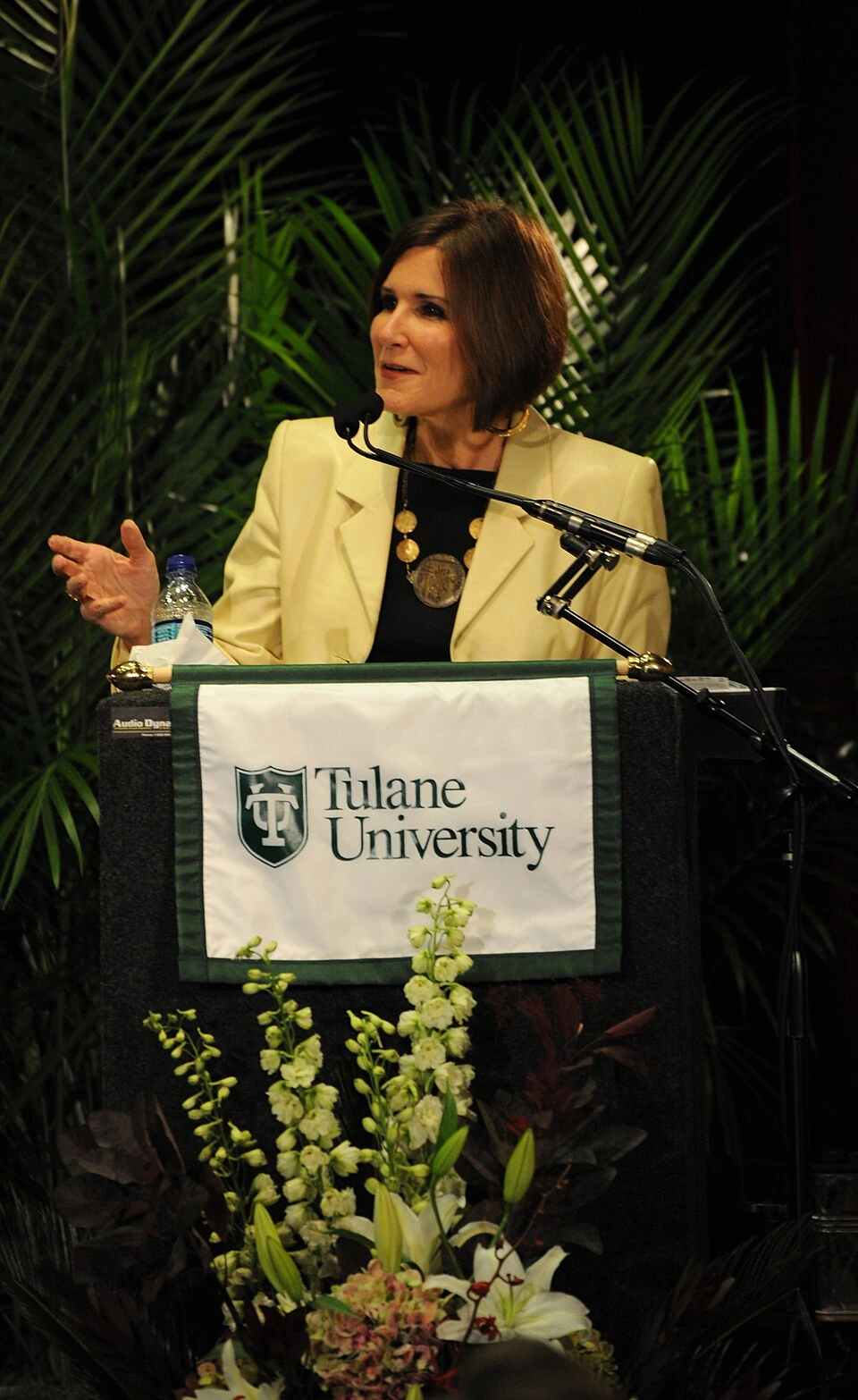
First: which Mary Matalin are we talking about?
The Mary Matalin behind this search is Mary Joe Matalin, born August 19, 1953, the well-known Republican political strategist and media commentator. She is probably best recognized for co-hosting CNN's political debate show Crossfire from 1999 to 2001, her senior roles at the Republican National Committee, and her work as chief editor of Threshold Editions (a Simon & Schuster imprint) starting in March 2005. She is also famous for being married to Democratic strategist James Carville, which makes their combined finances a frequent topic in the same breath as her individual profile. If you landed here after a slightly different spelling or a search for someone else, this is the person the major net-worth aggregator sites are reporting on.
Mary Matalin's estimated net worth right now

As of April 2026, the most commonly cited figures for Mary Matalin's net worth land in the $5 million to $6 million range. CelebrityNetWorth puts the number at $6 million, though it explicitly frames that as a combined figure with her husband James Carville. A separate aggregator, NetWorth20, estimates $5 million "as of 2026." So the practical range you should work with is $5M to $6M, with the important caveat that at least one of those figures is a household number rather than a solo one. Neither source gives you a precise individual breakdown, so treat both as directional estimates rather than audited figures.
Where the money actually comes from
The most concrete financial snapshot we have on Matalin comes from a 2001 Washington Post report on Bush administration financial disclosure forms. For the year 2000 alone, she reported $1.35 million in speaking-appearance income and $244,581 from hosting Crossfire on CNN. On top of that, her investment assets were listed in broad ranges totaling between $3.9 million and $9.7 million. That one data point is enormously useful because it gives you a real, timestamped baseline rather than a site's back-of-envelope guess.
Beyond those disclosed numbers, her wealth drivers over the years span several categories. Political consulting and advisory work has been her career foundation for decades. Her publishing role at Threshold Editions opened doors to book advances, editorial compensation, and industry relationships. Speaking fees have been a major income stream since at least the late 1990s, and she almost certainly continued commanding premium rates through the 2000s and 2010s given her bipartisan-celebrity status alongside Carville. Media appearances and any retained equity or ownership interests in communications ventures would also factor in, though those are harder to document without fresh disclosures.
Real estate adds another data point. In 2021, the couple sold their New Orleans mansion, which had been listed at $3.38 million (they reportedly paid about $2.2 million for it in 2008, so there was meaningful appreciation). They then purchased a New Orleans condo for nearly $2 million, also in 2021. Property transactions like these are traceable through county recorder databases and give you a partial picture of where liquid assets are being deployed. It is worth noting that Mary Matalin and James Carville's combined net worth is essentially inseparable in most public reporting, since their professional and personal finances are deeply intertwined.
Why net worth estimates vary so much depending on where you look

Here is the honest answer: every net-worth aggregator is making educated guesses based on incomplete data. The Washington Post's 2001 disclosure summary shows exactly why this is hard. Investment assets were reported in wide ranges ($3.9M to $9.7M), income streams were itemized separately, and the filing only covered a single year. When a net-worth site converts those ranges into a single round number like "$5 million" or "$6 million," they are collapsing real uncertainty into false precision. One site might anchor to the midpoint of the investment range, another might use more recent property values or inferred speaking-fee multiples, and a third might simply copy a number from another site without updating it.
The CelebrityNetWorth figure explicitly combines Matalin and Carville, while NetWorth20 claims to reference Forbes but does not show the underlying calculation on-page. Neither approach is wrong, exactly, but they are measuring different things. A combined household number will always look larger than an individual estimate, and sourcing claims that cannot be traced back to a primary document should be treated skeptically. This is not unique to Matalin: it is the standard limitation of net-worth aggregation across the industry.
How to sanity-check the number yourself
You do not need to take any site's word for it. The most reliable starting point is archived news reporting on actual financial disclosures. The 2001 Washington Post article on Bush administration financial disclosures is the best primary source currently available for Matalin's documented income and asset ranges. If she has held any state-level appointed position since then, she may have filed with a state ethics commission. For example, Florida's Ethics Commission runs a public financial disclosure portal where you can pull disclosure forms directly as PDFs and read asset and income ranges firsthand. Other states have similar systems, so it is worth checking the relevant jurisdiction if she has had any official state-level role.
For business interests, state business-entity portals let you search whether an individual appears as an officer, registered agent, or owner of any LLC or corporation. That tells you what entities exist; you can then estimate value from any available filings or property records connected to those entities. Colorado's open government business portal, for instance, provides entity pages with registration identifiers and officer details that are fully searchable. Other states offer comparable tools.
For real estate, parish or county recorder databases in Louisiana (where the couple owned property) let you pull title transfer records and mortgage liens by property address. Cross-referencing news reports of sale prices against recorder records is one of the cleaner verification methods available. When a site claims a new "as of 2026" estimate but does not show a clear last-updated timestamp or link to a specific public record, treat the number as potentially stale. The page's crawl date in Google cache can sometimes tell you more about freshness than the site's own header.
- Search for financial disclosure filings through the relevant state ethics commission portal (PDF forms usually show asset ranges and income categories with a filing date).
- Check state business-entity databases to confirm or rule out LLC/corporate ownership interests.
- Pull county or parish property records for known addresses to verify purchase prices, sale prices, and any outstanding mortgage liens.
- Cross-reference archived major-news reporting (like the Washington Post 2001 disclosure story) for dated, primary-sourced income and asset figures.
- Use page crawl dates and on-page update notes to assess whether an aggregator's estimate reflects recent data or is recycling an older number.

The $5M to $6M range puts Matalin in a financially comfortable but not outsized tier for high-profile political strategists who have successfully crossed into media and speaking circuits. For context, James Carville's speaking fees for the year 2000 alone were reported at $2.1 million, compared to Matalin's $1.35 million the same year, putting their combined speaking income at $3.4 million in a single year. That is a significant income base, and it suggests the household accumulated meaningful assets during the peak years of their media prominence. Peer comparisons are genuinely tricky because most political strategists do not have public financial disclosures unless they took government roles, so you rarely get apples-to-apples data.
What the $5M to $6M figure implies, practically, is that Matalin's wealth reflects a long career of high-earning but not hyper-lucrative work. She is not in the range of a major hedge fund executive or tech founder, but she has built durable wealth through diversified income: speaking fees, media, publishing, and real estate. That profile is consistent with what you see in other long-tenured political media personalities. For a different kind of reference point, Russell Maryland's net worth illustrates how public figures from entirely different career tracks can land in comparable ranges through their own mix of career earnings and post-career activities.
| Factor | What the data shows | Reliability |
|---|
| Speaking income (2000) | $1.35 million (disclosed) | High — government financial disclosure |
| CNN Crossfire income (2000) | $244,581 (disclosed) | High — government financial disclosure |
| Investment assets (2000) | $3.9M to $9.7M range (disclosed) | Medium — ranges, not exact values |
| New Orleans property (2021 sale) | Listed at $3.38M, bought for ~$2.2M in 2008 | High — news-sourced transaction data |
| New Orleans condo (2021 purchase) | Nearly $2 million | High — AP-sourced report |
| Aggregator net worth estimate | $5M to $6M (combined with Carville on some sites) | Low to medium — inferred, not audited |
Where to check today and what to do next
If you want the most current estimate available right now, CelebrityNetWorth and NetWorth20 are the two most frequently cited aggregators for Matalin. Check both, note whether the figures have been updated recently (look for a "last updated" date or a recent crawl date), and remember that the CelebrityNetWorth figure is household-combined. Neither number should be treated as precise. For anyone doing more serious research, the 2001 Washington Post financial disclosure story remains the most credible primary-sourced document publicly available, and any Louisiana property records from 2021 onward are worth pulling for asset context.
It is also worth knowing that net-worth pages for political figures at Matalin's level tend to update infrequently, often only when a major news event (a book deal, a property sale, a new role) generates fresh coverage. If you check a page claiming "2026" numbers but see no sourced updates from the past year, the underlying data is probably 2–5 years old with a refreshed headline date. That is a common practice across the aggregator space, and it is why cross-checking against primary records matters. If you are curious how similar research works for spouses of public figures with their own independent financial profiles, the approach used to estimate Mary Cosby's husband's net worth follows the same logic: layer disclosed income, traceable assets, and business-entity records to build a reasoned range.
One final note: net worth figures for people in political media are especially prone to combined-household framing, which can inflate or obscure individual numbers. Always check whether an estimate is solo or joint before using it to characterize one person's wealth. And if you want to explore how net-worth estimation applies to figures from other fields, the methodology used for someone like Cody Mauch's net worth shows how the same framework (career earnings, contracts, asset tracing) translates across very different industries.