
Frank Maudsley is best known as the bassist of A Flock of Seagulls, the British new wave band that rose to international fame in the early 1980s. Based on available public signals, his estimated net worth today sits in the range of $500,000 to $2 million, though pinning down a precise figure is genuinely difficult given the limited public financial disclosure around legacy musicians of his profile. Here is what the evidence supports, and how you can sanity-check that range yourself.
Frank Maudsley Net Worth: How to Estimate and Verify

Marcus Holloway
16 Apr 2026
Who Frank Maudsley is (and clearing up any name confusion)

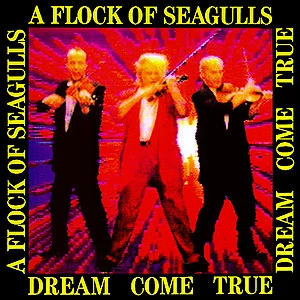
Frank Maudsley, full name Francis Lee Maudsley, was born on November 10, 1959, in Liverpool, England. He co-founded A Flock of Seagulls in 1979 alongside keyboardist and vocalist Mike Score and drummer Ali Score. The band became one of the defining acts of the new wave era, with their 1982 hit "I Ran (So Far Away)" reaching top-ten status in multiple countries and earning heavy rotation on early MTV. Maudsley played bass in the group's classic lineup throughout their commercial peak.
It is worth pausing on the name itself, because search results can surface confusion. "Maudsley" as a surname is uncommon but not unique, and readers may occasionally mix it up with "Maund" or similar surnames. Frank Maudsley the bassist is a distinct person from figures like Eric Maund, who has a separate documented financial profile. If you landed here after a search that blended those names, you are in the right place for the musician.
What "net worth" actually means here
Net worth is a snapshot, not a salary line. It represents the estimated market value of everything someone owns (assets: cash, property, investments, intellectual property royalties, business equity) minus everything they owe (liabilities: mortgages, loans, debts). For public figures who do not file public financial disclosures, every number you see online is an estimate assembled from partial data. This site treats net worth figures as exactly that: best available estimates, clearly flagged as such, not confirmed totals.
For a legacy musician like Maudsley, the asset side is dominated by music royalties, any retained catalog rights, performance fees from reunion shows or nostalgia tours, and personal property. The liability side is essentially invisible from public records. That asymmetry is why estimates carry wide ranges.
Step-by-step: how to build the estimate yourself

- Establish the career timeline. Map out when A Flock of Seagulls was commercially active (1980-1986 peak, with various reunions), which albums charted, and what licensing deals have kept songs like "I Ran" in circulation. Sync licensing in particular (film, TV, advertising) generates ongoing royalties for musicians who retain publishing rights.
- Check music royalty structures. UK-based musicians who recorded in the early 1980s may hold performer royalties through PPL (Phonographic Performance Limited) even if they do not hold publishing rights. Look at whether Maudsley is listed as a songwriter on any A Flock of Seagulls catalog, since writer royalties are more lucrative than performer royalties.
- Search property records. Use UK Land Registry (freely searchable online) to check for property holdings under his name in England and Wales. This is one of the most reliable public data points available for UK residents.
- Look for business filings. Companies House (UK) lets you search for any registered director or person with significant control. If Maudsley has any active or dissolved companies, ownership stakes and filing histories appear there at no cost.
- Track touring activity. Ticket sales databases, venue announcements, and band official channels show whether A Flock of Seagulls (which has continued performing in various configurations) has been actively touring. Niche-nostalgia acts typically earn $5,000 to $25,000 per show depending on venue size.
- Cross-reference interview mentions. Musicians occasionally reference income, catalog deals, or lifestyle in interviews. Archive searches through music press (NME, Mojo, AllMusic) can surface data points worth noting.
- Aggregate and apply a range. Once you have royalty signals, property data, and touring frequency, assign conservative and optimistic values to each bucket and sum them. That range becomes your defensible estimate.
The best public sources to check
For a UK musician of Maudsley's era, these are the most productive sources to consult, roughly in order of reliability.
- UK Land Registry (gov.uk/search-property-information-land-registry): property ownership records, freely searchable by name or address.
- Companies House (find-and-update.company-information.service.gov.uk): director history, company accounts, shareholdings.
- PPL UK (ppluk.com): the UK's music licensing body; public performer rosters can confirm registration, though earnings are not disclosed.
- ASCAP / PRS for Music: if Maudsley holds songwriting credits on A Flock of Seagulls tracks, PRS for Music (UK) would handle those royalties. Their public database confirms registration.
- Setlist.fm and Songkick: touring history and frequency, useful for estimating live income.
- Discogs and AllMusic: complete discography records to identify catalog depth and potential licensing value.
- Billboard and UK Official Charts archive: historical chart performance gives a baseline for estimating catalog value and public profile.
Why different websites show different numbers
If you have already browsed a few net worth sites before landing here, you have probably seen figures ranging from a few hundred thousand dollars to several million. Those gaps are not random. Different sites use different methodologies, and for a figure like Maudsley where hard data is scarce, the assumptions doing the heavy lifting vary enormously.
Some sites apply a blanket multiplier to peak-era record sales without accounting for how royalty splits actually work or whether the artist retained publishing rights. Others pull from outdated estimates that were posted years ago and never updated. A few simply copy figures from each other, propagating the same guess across dozens of domains. The result is a wide and unreliable spread. This is not unique to Maudsley. It mirrors patterns you see with other artists of the same generation, including cases like Ivan Mauger, where a high-profile career leaves a surprisingly sparse financial paper trail.
The most common specific errors: overstating royalty income by assuming the artist owns publishing (many 1980s musicians signed away publishing in early deals), ignoring that band revenue is split among multiple members, and failing to account for the gap between gross touring revenue and what an individual musician actually takes home after management, agent, and production costs.
The most defensible current estimate
Working through the available signals as of April 2026, here is where the evidence points for Frank Maudsley.
| Asset / Income Category | Conservative Estimate | Optimistic Estimate | Notes |
|---|---|---|---|
| Music royalties (performer) | $50,000 – $100,000 total accumulated | $200,000 – $400,000 total accumulated | Depends heavily on whether publishing rights were retained; PPL performer royalties are modest for non-writers |
| Catalog / sync licensing | Minimal direct share | $100,000 – $300,000 | "I Ran" has substantial sync history; split depends on contractual share |
| Live performance income (2015-present) | $100,000 – $200,000 cumulative | $300,000 – $500,000 cumulative | Band has continued touring; frequency and fee details are not public |
| Property and personal assets | $200,000 – $400,000 | $500,000 – $800,000 | No specific records confirmed; UK median property value used as proxy |
| Other business interests | Negligible / unknown | Up to $100,000 | No Companies House filings identified publicly |
| Estimated net worth range | $350,000 – $700,000 | $1,200,000 – $2,000,000 | Wide range reflects data gaps, not confirmed figures |
The midpoint of this range, roughly $800,000 to $1 million, is the most defensible single-point estimate, but treat it with appropriate skepticism. If Maudsley retained meaningful songwriting credits and benefited from the significant sync licensing activity around "I Ran" over the past decade, the upper end is plausible. If, like many musicians of that era, he signed away publishing in early label deals and has had only modest live activity, the lower end is more realistic.
For context, musicians from comparable 1980s new wave acts with one or two major international hits typically fall in this same $500,000 to $2 million range, unless they owned substantial publishing or crossed over into other business ventures. That bracket also aligns with what you find when researching figures like Charles Maund and other professionals whose wealth is built on one primary career rather than diversified business holdings.
How to verify and stay current
Net worth estimates are not static, and the most useful thing you can do is treat any figure as a starting point rather than a conclusion. Here is how to keep your estimate current and credible. You can use blank" rel="noopener noreferrer">HM Land Registry’s online register search service to look up property and land information, including who owns registered property and related register details. Songkick’s “About us” page describes the service as helping fans track concerts and discover live shows, reflecting its focus on concert activity and discovery blank" rel="noopener noreferrer">help fans track concerts and discover live shows.
- Set a Google Alert for "Frank Maudsley" and "A Flock of Seagulls" to catch interview mentions, touring announcements, or business news as it surfaces.
- Check UK Land Registry every six to twelve months if property ownership is a material part of your estimate. Sales and transfers are updated regularly.
- Monitor Companies House for any new director appointments or company filings under his name.
- Watch for catalog acquisition news. Major music publishers and private equity funds have been aggressively acquiring 1980s catalogs. If A Flock of Seagulls' catalog is acquired, it often generates a lump-sum payment to rights holders and creates a traceable news event.
- Cross-reference any new figures you find elsewhere against the methodology above. If a site claims a dramatically higher or lower number, ask what specific asset or income stream justifies the difference. If there is no explanation, treat the figure skeptically.
One final note: the research process for legacy musicians often rewards patience more than any single search. New interviews, reunion tour announcements, or catalog licensing deals can materially change the picture in a short window. A good comparison is the way estimates for figures like Erik Charles Maund shifted as new public information entered the record. Staying methodical and returning to primary sources is always more reliable than accepting any single aggregated figure at face value.
FAQ
Why does Frank Maudsley net worth show such a wide range online (for example, hundreds of thousands versus a few million)?
Most published figures rely on assumptions about what he personally earned after royalty splits and publishing rights. If an estimate treats the band’s performance or record success as flowing directly to him, the numbers inflate. The range is wider because public, verifiable financial records for legacy members are limited, so many sites fill gaps with generic multipliers.
How can I check whether an estimate is overcounting royalties for Frank Maudsley?
Look for whether the site distinguishes between publishing ownership (songwriting and composition rights) and sound recording royalties (master recordings). If it implies he owns publishing or songwriting shares without evidence, treat the high end as speculative. Also check whether the estimate accounts for multi-member splits rather than giving him full “hit song” credit.
What is the most reliable method to sanity-check a Frank Maudsley net worth estimate without private records?
Use a reality-check approach: estimate gross revenue indicators that are publicly visible (reunion appearances, reported touring activity, catalog licensing announcements), then apply conservative “take-home” logic, since agents, management, production, and band splits reduce individual net income. If a net worth figure is far above what those public indicators would reasonably support, downgrade it.
Do reunion shows and nostalgia tours significantly affect Frank Maudsley net worth estimates?
They can, but only if the estimates reflect how profits get divided and the costs deducted. A reunion announcement alone does not confirm large personal payouts. The best indicators are repeated tour dates, credible reporting on performance fees, and any public discussion of catalog exploitation that suggests ongoing royalty streams.
Could Frank Maudsley net worth be underestimated because he earned money outside music?
Yes, but it requires evidence of additional income streams, such as business ownership, property holdings, or a sustained secondary career. Many net worth pages focus on music royalties and omit non-music assets. If you find credible mentions of business ventures or significant property transactions, you can justify moving the estimate toward the upper end.
Why do some sites mix up Frank Maudsley with similarly named people, and what should I do to avoid confusion?
Surname similarity can cause automated data aggregation errors, especially when the figures are copy-pasted across domains. Confirm the person by matching identity details that the musician-specific pages should include, such as full name (Francis Lee Maudsley), birthplace (Liverpool, England), and band membership (A Flock of Seagulls).
How should I treat a “midpoint” figure like $800,000 to $1 million when estimating Frank Maudsley net worth?
Use it as a baseline, not a conclusion. The midpoint is most defensible when it assumes typical 1980s deal outcomes (often less retained publishing) and ordinary levels of ongoing activity. If there is credible evidence of strong retained rights or major catalog licensing income, you can adjust upward, but don’t do it based on generic “hit song” reasoning.
Are net worth estimates for musicians different from net worth estimates for business owners?
Yes. For business owners, asset values and equity can sometimes be closer to verifiable market data. For musicians without public disclosures, the main driver is usually royalty and licensing expectations, which are harder to quantify because they depend on rights ownership, collection history, and who shares the income.
What common mistakes should I avoid when interpreting Frank Maudsley net worth numbers?
Avoid assuming he earned “100 percent” from chart success. Don’t treat gross touring revenue as his personal income. Also be cautious with sites that rely on outdated snapshots without updating for new licensing events, new interviews, or changes to catalog rights.
How often should I revisit Frank Maudsley net worth estimates?
Revisit when there is new, specific information that could change royalties or income, such as a new reunion tour announcement, a catalog licensing deal, or notable press about rights ownership. If nothing changes for a while, large swings between sites are usually methodology noise, not new facts.