
The best available estimate for Maury (Morey) Amsterdam's net worth at the time of his death in 1996 sits in the range of $1 million to $5 million, with most aggregator sites clustering around $2 million to $3 million. That range is wide, and the reasons behind it are worth understanding, especially if you are trying to judge which number to trust. This article lays out what we know, what is inferred, and how to check the work yourself.
Maury Amsterdam Net Worth: Estimates, Methods, and Breakdown

Marcus Holloway
18 Apr 2026
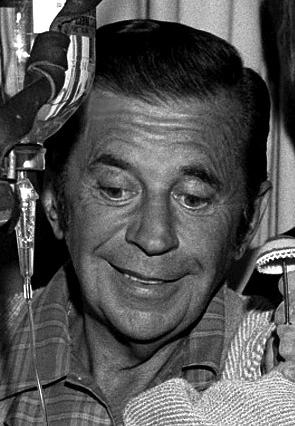
Who Maury Amsterdam was and why his net worth keeps coming up

Morey Amsterdam (born Moritz Amsterdam on December 14, 1908, died October 28, 1996) was an American comedian, actor, writer, and producer whose career spanned roughly six decades. Most people searching his name today know him as Buddy Sorrell, the quick-witted comedy writer on CBS's The Dick Van Dyke Show, which ran from 1961 to 1966. That role is the anchor of his cultural legacy. Before it, he hosted his own early television sitcom, The Morey Amsterdam Show, from 1948 to 1950, and before that he worked the vaudeville and nightclub circuit, wrote jokes for other performers, and made regular radio appearances.
His net worth comes up in searches for a few reasons. Fans of classic television are curious about the financial reality behind their favorite performers. Others are doing comparative research, wanting to place Amsterdam alongside contemporaries like Carl Reiner or Dick Van Dyke. And some searchers are simply doing general celebrity wealth lookups and land on his name. Whatever brought you here, the answer requires some context because Amsterdam died 30 years ago and the financial trail is old and partially obscured.
How net worth gets estimated for older public figures
Net worth is straightforward in theory: total assets minus total liabilities. In practice, for a performer who died decades ago, the calculation is almost entirely reconstructed from indirect evidence. Third-party estimator sites typically work backward from known income streams, apply industry-standard multiples or averages for the era, factor in any documented asset purchases (real estate, business interests), subtract estimated taxes and living costs, and arrive at a number. That process involves a lot of assumptions.
For entertainers active in the 1950s through the 1980s, a few methodological challenges compound the uncertainty. Television residuals and syndication structures were far less standardized than they are today. Union minimums under SAG and AFTRA have been documented historically, so researchers can estimate floor-level earnings, but actual negotiated salaries are rarely public. Real estate records from that era are harder to digitize and search. Estate filings, when they exist and are accessible, are the most reliable primary source, but they are not always publicly available or easy to locate.
When you see a figure on a net worth aggregator site, it is worth asking: did they cite a primary source like a probate record or an estate filing? Or did they derive the number from prior aggregator estimates, essentially citing each other in a circle? The latter is extremely common. Sites like Celebrity Net Worth, The Richest, and similar properties do publish estimates, but their methodology pages are often vague. Treat those numbers as informed starting points, not verified facts. You can apply this same critical lens when looking at net worth profiles for other Maury-named public figures to see how estimates are constructed across different career types.
The compiled estimates and why they differ

Here is a consolidated look at the estimate landscape for Morey Amsterdam's net worth, along with the likely methodology behind each tier:
| Source Type | Estimated Net Worth | Likely Methodology | Reliability Notes |
|---|---|---|---|
| Celebrity aggregator sites (e.g., Celebrity Net Worth) | $2 million | Career income reconstruction, no cited primary source | Frequently cited but rarely sourced to primary records |
| Secondary aggregators repeating first-tier estimates | $1 million to $3 million | Direct copy or minor adjustment of prior estimates | Low independent reliability; circular sourcing likely |
| Biographical/historical entertainment research | $2 million to $5 million | SAG/AFTRA era wage data, syndication assumptions, career longevity adjustment | More methodologically grounded but still estimated |
| Estate/probate records (if located) | Not publicly confirmed | Primary legal source | Most reliable if accessible; not confirmed located as of this writing |
The main reasons different sources land at different numbers come down to four variables: which income periods they count, whether they account for residuals and syndication earnings from The Dick Van Dyke Show reruns, how they handle post-1966 career work (which was active but lower profile), and whether they apply any inflation adjustment to put the figure in modern dollar terms. A $2 million figure in 1996 dollars translates to roughly $4 to $4.5 million in 2026 dollars, which explains why some sites report higher numbers without flagging that they have inflation-adjusted the estimate.
Where the money came from: Amsterdam's income streams
Understanding the estimate range gets much easier when you map Amsterdam's career timeline against likely earnings. His income sources fall into several distinct phases.
Early career: vaudeville, radio, and nightclubs (1920s to 1940s)
Amsterdam built his name on the nightclub and vaudeville circuit in the 1920s and 1930s. He was known as a rapid-fire joke teller with a near-encyclopedic memory for gags. This period would have produced steady but modest income by modern standards. Nightclub headlining in that era could pay well relative to average wages, but it did not generate the kind of residual or royalty income that television later would. His joke-writing work for other performers added to this, though the specific sums are not documented publicly.
Early television: The Morey Amsterdam Show (1948 to 1950)

Hosting his own sitcom on early television placed Amsterdam at the front of a new medium. Early television salaries were often lower than what radio stars commanded, partly because the industry was still establishing its financial structure. The show ran for two seasons, providing income but not the kind of long-tail syndication value that later TV shows would generate. Still, establishing himself as a television personality in this period set up the career capital that would eventually lead to The Dick Van Dyke Show.
Peak earnings: The Dick Van Dyke Show (1961 to 1966)
This is almost certainly the highest single-period earning phase of Amsterdam's career. As a supporting cast member on a major CBS network comedy, he would have earned under SAG television minimums at minimum, with negotiated rates above that given his established profile. CBS paid competitive rates for its comedy lineup in the early 1960s. Exact per-episode salary figures have not been confirmed publicly, but comparable supporting cast salaries on major network comedies of that era ranged from a few hundred to several thousand dollars per episode. With 158 episodes produced over five seasons, even conservative per-episode estimates add up meaningfully.
Residuals are the complicating factor. The Dick Van Dyke Show entered syndication and has been in nearly continuous rerun and distribution since its original run ended. Amsterdam would have received residual payments under his guild agreements, though the rate structures for 1960s television residuals were much lower than current standards. This income stream likely continued in small but real amounts through subsequent decades.
Later career: film, television guest work, and live appearances (1967 to 1990s)
After The Dick Van Dyke Show ended in 1966, Amsterdam remained active as a performer for decades. He made film appearances, did television guest spots, continued live comedy work, and took advantage of his recognizable public profile for personal appearances and conventions. This period is lower-profile and harder to document financially, but it represents a long stretch of ongoing professional activity. It would not have matched peak TV earnings, but it was not zero either. This kind of sustained lower-level income over two-plus decades contributes meaningfully to a lifetime wealth estimate.
Assets, property, and what can actually be verified
This is where the data gets thin. For performers of Amsterdam's generation who lived in the Los Angeles area, property records are the most accessible public asset signal. California property records from the 1970s through 1990s are increasingly digitized, and Los Angeles County assessor records can sometimes be searched for historical ownership. However, the specific confirmed details of Amsterdam's real estate holdings have not been widely published in accessible biographical sources or reputable financial profiles.
What we can say with reasonable confidence: Amsterdam lived in the Los Angeles area for most of his working life, which would imply real estate ownership during a period of significant California property appreciation. A home purchased in the 1950s or 1960s in greater Los Angeles would have appreciated substantially by the time of his death in 1996. That alone could account for a meaningful portion of any net worth estimate. Business interests, investment accounts, and other financial assets are not documented in publicly available sources this research has identified.
The honest assessment: confirmed asset details are sparse. Most estimates are working from income reconstruction rather than documented asset inventories. If you want a more grounded number, estate filings through the Los Angeles County Superior Court probate division would be the most direct path, and property transaction records through the LA County Assessor's office are worth checking. Both require some legwork but are public records.
It is also worth noting that asset verification challenges are not unique to Amsterdam. A public figure like Maury Gallagher, whose wealth profile involves business ownership rather than entertainment income, faces entirely different documentation patterns, but the same core principle applies: you need primary records to move from estimate to confirmed figure.
Career timeline, spending context, and what affects the final number
Net worth is not just about earning; it is about what you keep. For performers of Amsterdam's generation, several factors commonly erode wealth accumulation relative to gross earnings. Federal income tax rates in the 1950s and 1960s were significantly higher than today, with top marginal rates exceeding 90% for much of the Eisenhower and early Kennedy years. Even at lower actual effective rates after deductions, high earners in that era paid more of their income in taxes.
Agent commissions (typically 10 to 15%), manager fees, publicist costs, and business expenses for a working performer also reduce net income substantially. Amsterdam was active long enough that these costs accumulated over decades. Additionally, entertainers of that era did not universally have access to the sophisticated financial planning infrastructure available today. Some built substantial wealth through real estate and diversified investments. Others spent freely relative to their peak earning years and arrived at later life with more modest assets.
Amsterdam's career arc is actually more favorable than many peers in one respect: he worked consistently for a very long time. A comparison point is useful here. Consider the profile of Maury Davis, another public figure whose wealth estimation involves parsing decades of career income across multiple professional phases. The principle is the same: longevity of career and diversity of income streams matter as much as any single peak-earning period.
For Amsterdam specifically, the Dick Van Dyke Show era (1961 to 1966) is the highest-confidence peak. Before it, earnings were real but modest. After it, earnings continued but at a lower level. Estate accumulation would have been shaped by what he did with the peak-era income, which is not documented publicly.
How to verify the number and do your own research

If you want to go beyond aggregator estimates and build a more grounded picture of Morey Amsterdam's net worth, here is a practical checklist of next steps:
- Search Los Angeles County Superior Court probate records: Amsterdam died in Los Angeles in October 1996. Estate filings, if accessible, would include an inventory of assets at time of death. This is the single most reliable primary source for a deceased individual's net worth.
- Check LA County Assessor historical records: Property ownership history for addresses associated with Amsterdam can confirm real estate holdings and purchase/sale prices. The LA County Assessor's online portal allows historical searches.
- Review SAG-AFTRA historical rate cards: The Screen Actors Guild and AFTRA (now merged) have published historical minimum rate schedules. For The Dick Van Dyke Show era, these establish a documented floor for what Amsterdam would have been paid per episode at minimum.
- Consult reputable biographical sources: Books specifically covering The Dick Van Dyke Show's production history (several have been written by cast and crew) sometimes include salary context or financial detail not available in online profiles.
- Evaluate aggregator sites critically: When a net worth site lists a figure, check whether they cite a source. If they do not, treat the number as a rough estimate. If multiple sites list the same figure without variation, that usually indicates they copied from one original source rather than conducting independent research.
- Check academic or trade archives: Variety and The Hollywood Reporter maintain historical archives. Trade press coverage from the 1960s sometimes included salary reporting or contract details that are now accessible through library databases.
- Look for interview sources: Amsterdam gave interviews through his later career discussing his life and work. Occasionally performers discuss finances or lifestyle in ways that provide useful proxies for wealth level, even when they do not give specific numbers.
One additional angle worth exploring is comparison research. Looking at how peers from the same era, like Rose Marie or Richard Deacon (fellow Dick Van Dyke Show cast members), have been documented financially can help triangulate a reasonable range for Amsterdam. If similarly positioned cast members show consistently in the $1 million to $4 million range in contemporary estimates, that provides a peer-group check on any outlier figure you might encounter. For a broader comparative perspective on how entertainment-era wealth gets profiled, the approach used for figures like Maury Sterling illustrates how career-phase analysis drives the estimation process regardless of the specific performer.
The same methodological principles apply when you are researching any historical public figure's wealth, whether it is a classic TV comedian or someone from a completely different field. The research approach used for profiling figures like Amon G. Carter, whose wealth was documented through different asset classes entirely, shows how the primary-source-first approach always outperforms aggregator reliance.
The bottom line on Maury Amsterdam's net worth
The best available estimate for Morey Amsterdam's net worth at the time of his 1996 death is approximately $2 million to $3 million in 1996 dollars, which translates to roughly $4 million to $5.5 million in 2026 dollars after inflation adjustment. The most commonly cited single figure across aggregator sites is $2 million (unadjusted). That figure is plausible given his career trajectory, but it is not sourced to any confirmed primary record in the publicly available research.
The core driver of his wealth was his television career, particularly The Dick Van Dyke Show, supplemented by decades of live performance work and ongoing syndication residuals. The main uncertainties are his real estate position, the specifics of his post-1966 earnings, and whatever investment or savings behavior he practiced during his peak years. Until estate or probate records are located and reviewed, any figure you see should be treated as a well-reasoned estimate, not a confirmed fact. That is a perfectly normal state for a public figure from this era, and it does not mean the estimate is useless. It just means you know exactly how confident to be in it.
FAQ
Why do some sites list Maury Amsterdam net worth far higher than the $1 million to $5 million range mentioned here?
Most spikes come from using inflation adjustment inconsistently, counting uncertain income streams (like residuals) at aggressive rates, or compounding estimates by referencing other aggregator figures. Another common driver is treating an unspecified “assets” figure as “net worth” without separating debt or liabilities.
If I want a more accurate Maury Amsterdam net worth estimate, what is the single best document to look for first?
Start with probate or estate filings tied to his death in Los Angeles County. Those records can reveal verified assets, claims against the estate, and sometimes the final distribution, which lets you replace assumptions with a primary-source basis.
How can I tell whether an aggregator site is recycling estimates instead of calculating from real records?
Check whether they cite any primary documents (probate, estate accounting, property records) or if they only describe a generic “income reconstruction” method. If multiple sites quote the same number and use similar language without new sourcing, that is a strong sign they are drawing from each other.
Do residuals from The Dick Van Dyke Show materially change Maury Amsterdam net worth estimates?
Yes, but usually in a limited way relative to peak-era income. The uncertainty is how residual rates and payout timing would have applied to him specifically, and whether the estimator assumes low, average, or high collection outcomes over decades.
What is the biggest variable in estimating his wealth, besides income reconstruction?
Asset verification, especially real estate. Even when income is reasonably estimated, net worth changes dramatically depending on whether he owned one home outright, multiple properties, or had substantial encumbrances or a smaller equity position than assumed.
Should I compare Maury Amsterdam net worth to Dick Van Dyke or other cast members directly?
Be careful. Peer comparison can help triangulate a plausible range, but cast roles differ (lead vs supporting, contract terms, ownership of IP, and whether someone negotiated higher syndication participation). Use comparisons as a sanity check, not as a direct multiplier.
How do inflation adjustments cause confusion when people quote Maury Amsterdam net worth today?
Some sites inflate the 1996-era estimate to current dollars, others do not. If you see a “modern” number, confirm the implied year basis, because $2 million unadjusted can look like $4 million to $5 million after conversion, even if the underlying assets at death were the same.
Could taxes, commissions, and living expenses explain why net worth seems lower than expected?
They can. High historical tax rates, plus agent and manager commissions (often a percentage of earnings), and ongoing production or business expenses reduce what remains available to convert into assets. Estimators that ignore these frictions can overstate net worth.
If I find property records, what do I need to check to turn them into a net worth figure?
Ownership details alone are not enough. Look for the purchase and sale dates, how much equity likely existed at the time of death, and whether there were mortgages or liens. Without that, you might convert gross property value into net worth incorrectly.
Is there a reliable way to estimate post-1966 earnings when the exact income is not public?
You can approximate it by mapping documented activity (film roles, TV guest spots, live performances) to typical compensation ranges for the era, then discount for infrequency and lower-profile work. The key is to treat it as a range, not a fixed number, and to avoid assuming the same residual impact as his peak network period.
When researching “Maury Amsterdam net worth,” how do I avoid confusing him with similarly named public figures?
Confirm identity details first, for example birth name and dates, and whether the person is linked to Buddy Sorrell and The Dick Van Dyke Show. Name collisions are common, especially with other “Maury” profiles, and one wrong identity can produce completely unrelated wealth estimates.