
The Massry family most likely refers to the Albany, New York real estate family built around Morris Massry and his son I. Norman Massry, the principals behind Massry Realty Partners and its operating arm Tri City Rentals. Based on publicly documented assets, the family's net worth is most defensibly estimated in the range of $300 million to $600 million, driven almost entirely by a private real estate portfolio of roughly 15,000 apartment units across New York, Tennessee, Florida, and Texas.
Massry Family Net Worth: How to Estimate and Verify

Marcus Holloway
12 May 2026

That range carries meaningful uncertainty because the core business is privately held, so no audited valuation is publicly available. What follows is a breakdown of who the Massry family is, how those numbers are built, and how you can verify or refine the estimate yourself.
Who the Massry family actually is

When people search for "Massry family net worth," they are almost always looking at a Capital Region of New York real estate dynasty, not a celebrity or Wall Street figure. The family's public footprint is institutional rather than media-facing, which is why clean information takes some digging.
The core individuals are Morris C. Massry, the patriarch and founder of Tri City Rentals, and his son I. Norman Massry, who serves as CEO of Tri City Rentals and Massry Realty Partners. An Albany IDA project summary for Park South Partners LLC lists Norman Massry and Morris Massry each holding a 49.5% ownership stake, which gives you a concrete, public-record snapshot of how ownership is split between the two principals. A third family name that appears in company communications is Julie Massry Knox, listed as a contact representative for Tri City Rentals in multiple chamber of commerce directories and in a 2024 press release, suggesting continued family involvement at the operational level.
The operating entity most tied to Massry family wealth is Tri City Rentals, LLC, a New York domestic LLC registered since January 13, 2003, headquartered at 255 Washington Avenue Extension, Albany, NY 12205. A New York company directory listing for NM TOWERS, LLC also associates the business with a C/O address at 255 Washington Ave Ext.
, Albany, NY 12205 Tri City Rentals, LLC, a New York domestic LLC registered since January 13, 2003, headquartered at 255 Washington Avenue Extension, Albany, NY 12205. .
Massry Realty Partners is the development and ownership brand layered above it. A June 2023 SUNY resolution naming the UAlbany business college after the family confirms the geographic footprint: Capital Region, Buffalo, Rochester, Nashville, Pensacola, and San Antonio, putting this firmly in the multi-market, mid-scale apartment ownership category.
One important scope note: there is a Massry Charitable Foundation Inc., a private foundation with Norman Massry as President and Morris Massry as Vice President. Its fiscal year 2021 net assets (book value) were $42,835,683 with zero liabilities blank" rel="noopener noreferrer">according to ProPublica's Nonprofit Explorer IRS data. That foundation wealth is legally separate from personal net worth, though it reflects the scale of the family's philanthropic capacity and indirectly signals overall wealth scale. This same range logic is why searches for “maus frères net worth” often land on different figures online.
How net worth estimates are built, and why numbers vary
Net worth is simple in theory: total assets minus total liabilities. In practice, for a private real estate family like the Massrys, almost every input involves an estimate. Here is how the major categories work and where the uncertainty enters.
Real estate portfolio valuation
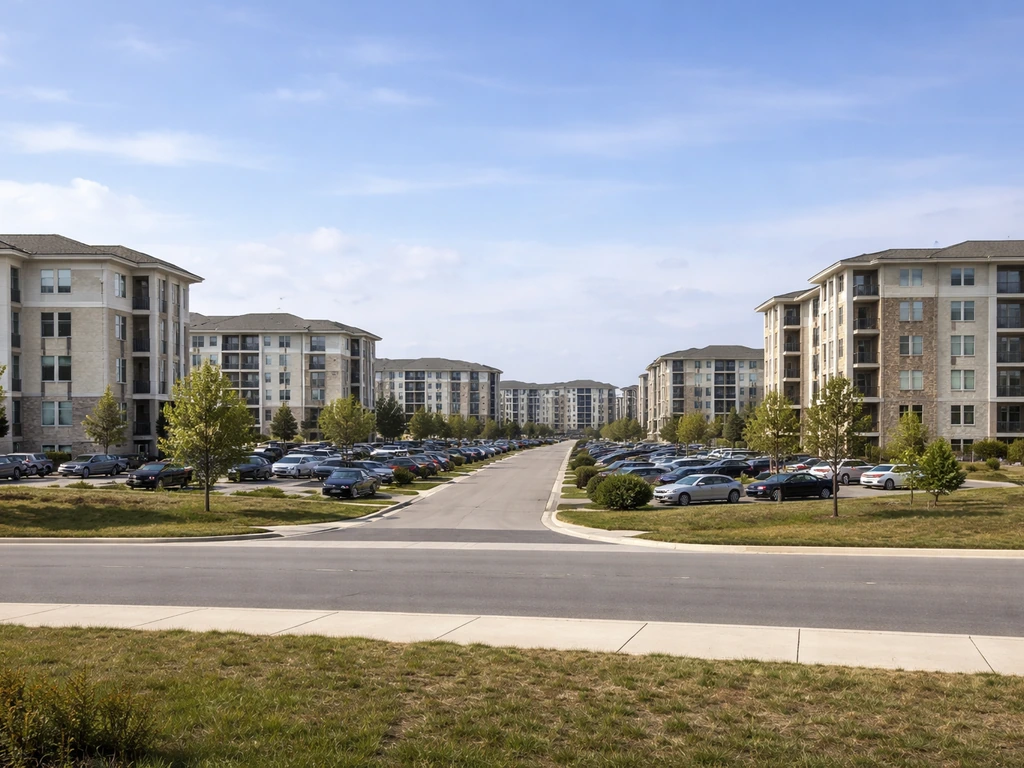
Tri City Rentals / Massry Realty Partners owns and operates more than 50 apartment communities with approximately 15,000 units, according to Times Union reporting on Morris Massry. Apartment portfolios at this scale are typically valued using a capitalization rate (cap rate) applied to net operating income (NOI). In 2025 and early 2026, multi-family cap rates in secondary markets like Albany, Buffalo, and Rochester generally range from 5% to 7%.
In Sun Belt markets like Nashville and San Antonio, cap rates have compressed to roughly 4. 5% to 6%. If you assume an average monthly rent of $1,000 per unit across 15,000 units, gross annual revenue is roughly $180 million. After expenses (typically 40% to 50% for multi-family), you get NOI in the $90 million to $108 million range.
At a 6% cap rate, that implies a portfolio value of $1. 5 billion to $1. 8 billion. That sounds enormous, but remember: this is gross enterprise value, not equity.
The debt on a portfolio this size is substantial.
Debt and leverage
Multi-family real estate at this scale is almost always highly leveraged. Loan-to-value ratios of 60% to 75% are standard for stabilized apartment portfolios. At 65% LTV on a $1.5 billion portfolio, outstanding mortgage debt would be roughly $975 million, leaving equity of approximately $525 million. That equity is shared between Norman and Morris Massry (and potentially other partners, as Park South Partners also lists Mark Rosen and MRP Associates LLC as owners). Since we do not have audited financials, this is the single biggest source of uncertainty in any Massry family net worth estimate.
Why published figures differ

You will find wildly different numbers across the internet for private real estate families. The main reasons: some sources use gross portfolio value (not equity), some ignore debt entirely, some use outdated valuations from different interest rate environments, and some confuse the Massry family with unrelated people sharing the surname. Always check whether a published figure is asset value or net equity, and whether it accounts for multiple owners versus a single individual.
What to collect when building a family net worth estimate
If you want to build your own defensible estimate, you need to gather data across several categories. Here is what matters for a family like the Massrys.
- Real estate holdings: entity names (MRP Schuyler LLC, Park South Partners LLC, Tri City Rentals LLC, etc.), unit counts, property locations, and approximate rents. State business registries like OpenGovNY and NYSDOS are your starting point.
- Ownership percentages: IDA project summaries, operating agreements filed with courts, or press coverage that explicitly names ownership splits. The Park South Partners Albany IDA filing naming Norman Massry and Morris Massry at 49.5% each is a rare example of a public record doing this clearly.
- Financing and debt: check county property records and ACRIS (for NYC) or equivalent county clerk databases for mortgage filings. Each recorded mortgage tells you the lender and original loan amount.
- Foundation assets: IRS Form 990-PF filings accessed through ProPublica Nonprofit Explorer give you audited book-value figures for foundation holdings. The Massry Charitable Foundation's $42.8 million in net assets (2021) is a verified floor on that slice of wealth.
- Business interests outside real estate: any equity stakes in operating businesses, development partnerships, or investments. These are harder to find without court records or SEC filings, but public IDA and REDC documents sometimes reveal joint venture partners.
- Personal real estate: residential property owned by family members separately from the business portfolio. County assessor databases (Albany County, Erie County, etc.) provide assessed values and recent sale prices.
- Liquidity and securities: for private families, this is largely invisible unless they appear in SEC beneficial ownership tables (DEF 14A filings) as stockholders in public companies.
Putting a number on the Massry family total
Using the framework above, here is how a reasonable aggregate estimate is built. This is not an audited figure and should be treated as an informed range, not a fact.
| Asset / Component | Low Estimate | High Estimate | Notes |
|---|---|---|---|
| Massry Realty Partners / Tri City Rentals equity (gross portfolio ~$1.5B, 65% LTV) | $400M | $600M | Depends heavily on actual debt load and cap rate used |
| Massry Charitable Foundation net assets | $43M | $43M | ProPublica-verified 2021 book value; legally separate from personal wealth |
| Personal real estate and other assets | $20M | $60M | Estimated; not publicly documented in detail |
| Less: debt not captured in portfolio LTV estimate | -$50M | -$100M | Potential personal guarantees, development loans, etc. |
| Estimated family net worth range | $413M | $603M | Rounded: ~$400M to ~$600M |
The ownership split is important here. If Norman and Morris Massry each hold roughly 49.5% of the core business (as documented in the Albany IDA filing for at least one entity), the per-person share of that equity range is roughly $200 million to $300 million each, before personal assets or foundation stakes are added. Other partners like Mark Rosen (named in the Park South Partners IDA filing) may hold equity in specific projects, which would reduce the Massry family's share in those deals.
For context, a $400 million to $600 million family net worth from a multi-family real estate portfolio of this scale is consistent with comparable private regional real estate operators. It is a substantial but not extraordinary figure for a family that has operated in this space for multiple decades across multiple markets. Publicly documented philanthropic capacity (naming rights for a university business college, blank" rel="noopener noreferrer">significant charitable foundation assets) also aligns with wealth in this range, not orders of magnitude above or below it.
How to verify claims and avoid mix-ups

The name Massry is not extremely common, but it is uncommon enough that any misspelled or misattributed source can send you in the wrong direction. Tony and Maureen Wheeler are sometimes mentioned in searches alongside other names, so verify whether you are looking at the correct family and the right net worth claim. Here is how to stay on track.
Primary sources to trust
- NYSDOS Division of Corporations entity search: verifies that entities like Tri City Rentals LLC, MRP Schuyler LLC, and Massry Realty Partners are actually registered under these names and at the Albany address.
- Albany IDA and Capital Region EDC project documentation: these government filings name ownership percentages and project partners directly. Cross-check against entity registry records.
- ProPublica Nonprofit Explorer: for the Massry Charitable Foundation, pulls IRS 990-PF data with audited figures for assets, liabilities, and net assets.
- County property records (Albany County, Erie County, Monroe County): searchable by owner name or LLC name for recorded deeds, mortgages, and assessed values.
- University press releases: Bentley University and the University at Albany have both published biographical descriptions of Norman Massry that confirm his role and the company's scope. These are institutional sources with accuracy incentives.
- Times Union: the Albany-area newspaper of record for Capital Region business news. Its obituary and tribute coverage of Morris Massry contains factual descriptions of the company's portfolio size.
Sources to be cautious with
- Celebrity net worth aggregator sites that list a single number without sourcing: these often copy from each other or confuse the subject with someone else entirely.
- LinkedIn profiles and business directory listings: useful for identity confirmation but not for financial figures.
- Any source that attributes Massry family wealth to publicly traded companies without a specific SEC filing reference. The Massrys' documented wealth is in private real estate, not public equities.
- Buzzfile and similar commercial data aggregators: helpful for address and entity confirmation, but their revenue and employee estimates for private companies are notoriously unreliable.
One common mix-up risk: searching for "Massry" may return results about unrelated people with similar names, or about the Massry Centre for Music (a performing arts venue at the College of Saint Rose in Albany, named after the family). That venue connection is legitimate and actually helps confirm the family's identity, but do not treat the venue's budget or endowment as a net worth figure.
Build your own estimate: a practical workflow
If you want to go beyond this article and build your own tracked model, here is a straightforward approach you can execute today using free public sources.
- Open a spreadsheet with four tabs: Entities, Real Estate, Liabilities, and Summary.
- In the Entities tab, list every Massry-linked LLC and entity you find on NYSDOS and OpenGovNY. Record: entity name, DOS ID, filing date, registered address, and named officers. This is your disambiguation layer.
- In the Real Estate tab, for each entity, search Albany County (and Erie, Monroe, and other relevant counties) property records for deeds and mortgages. Record: property address, assessed value, most recent sale price if available, and any recorded mortgage amounts.
- In the Liabilities tab, sum all recorded mortgage amounts you found. Add a buffer of 10% to 20% for debt not captured in public records (HUD loans, private lending).
- Run a cap rate valuation: multiply estimated annual NOI (gross rent minus ~45% expenses) by your chosen cap rate range (5.5% to 7% for this portfolio type). This gives you a gross portfolio value range.
- Subtract total liabilities from gross portfolio value to get estimated equity. Apply ownership percentages (49.5% Norman, 49.5% Morris based on the IDA filing) to get per-person estimates.
- Add ProPublica-verified foundation assets ($42.8M as of 2021; check for more recent filings) and any personally held property you found in county records.
- Record your confidence level for each line item: High (government-filed document), Medium (institutional press release), or Low (aggregator or inference). Weight your summary range accordingly.
- Set a calendar reminder to refresh the model annually, especially after any major interest rate changes that would shift cap rates and portfolio valuations.
Quick source checklist
- NYSDOS entity search (apps.dos.ny.gov) for all Massry-linked LLCs
- Albany IDA project database for ownership disclosures
- ProPublica Nonprofit Explorer for Massry Charitable Foundation 990-PF filings
- Albany County property search and county clerk mortgage index
- Erie County, Monroe County, and Tennessee/Florida/Texas county property records for out-of-state holdings
- Times Union archives for historical portfolio descriptions
- University at Albany and Bentley University press releases for biographical scope confirmation
- Capital Region EDC progress reports for Massry Realty Partners project mentions
Families like the Massrys are comparable in structure to other prominent private real estate dynasties covered on this site. If you find this type of regional real estate family wealth research useful, similar methodology applies to other family-controlled portfolios where the wealth story is almost entirely in private holdings rather than public markets. The core discipline is the same: anchor to government-filed documents, apply conservative valuation multiples, and always present your result as a range with an honest note about what you could not verify.
One final disclaimer worth repeating: any figure you see for the Massry family net worth, including the $400 million to $600 million range in this article, is an estimate derived from public proxies, not an audited accounting. Real estate valuations shift with interest rates, occupancy rates, and local market conditions. The actual number could be meaningfully higher if the portfolio carries less debt than typical, or meaningfully lower if there are liabilities or impaired assets not visible in public records. Treat every estimate, including this one, as a well-informed starting point, not a definitive answer.
FAQ
Why do some websites show Massry family net worth far higher than the $300M to $600M range?
Use two checkpoints, cap rate and expense ratio, then verify whether the source is describing gross portfolio value or equity. If a figure already subtracts debt, it will usually be far closer to the $300 million to $600 million equity range, while figures that look closer to $1.5 billion to $1.8 billion are typically enterprise value (asset value), not net worth.
If Norman and Morris each own about 49.5% of an entity, does that mean each person’s net worth share is exactly half of the estimate?
Because the portfolio is likely consolidated through LLCs and partnerships, personal net worth can differ from entity-level ownership. A practical test is to map which entities own the apartments, then check ownership stakes and whether there is debt at the operating-entity level versus debt recourse to the owners.
How can I refine the estimate instead of using one cap rate for all markets?
Don’t rely on a single cap rate. Cap rates can vary by asset vintage, occupancy, and market sub-areas, so you can refine the model by using blended cap rates per region and then adjusting NOI using a realistic occupancy assumption (for example, 90% to 96% leased for stabilized operations).
What’s the best way to account for uncertainty in the mortgage debt level?
Yes, model debt as a range by checking for typical amortizing loan terms and by separating fixed-rate versus variable-rate exposure where it is publicly inferable. Even without full statements, a useful adjustment is to test lower-debt and higher-debt scenarios around the 60% to 75% loan-to-value band.
How do I avoid overestimating equity if there is more than one layer of financing?
A portfolio can have big “value” while equity is lower if there are subordinated loans, partner pref equity, or substantial cash sweeps tied to refinancing. If you can find any secondary financing references in public filings, include it as additional liability in the equity calculation rather than assuming only senior mortgages.
What input usually causes the biggest swings in net worth estimates for apartment owners?
NOI is sensitive to operating assumptions. If a source uses an overly optimistic expense ratio (too low), or assumes rent growth that is not realistic, net operating income will be inflated and net worth estimates will drift upward. Cross-check expense ratio assumptions against typical multi-family operating ranges for the relevant property class.
Does entity equity value always translate directly into personal net worth for the family?
Consider taxes and entity structure: if some assets are held in structures that distribute cash differently, the ability to turn entity value into personal net worth can be delayed or partially limited. This doesn’t negate the estimate, but it explains why “ownership equity value” can differ from “liquid personal wealth.”
Should Massry Charitable Foundation net assets be added to the Massry family net worth?
Charitable foundation net assets are legally separate from personal net worth. However, a practical caveat is that foundation holdings can overlap with family-controlled entities indirectly, so you should not simply add foundation book assets to personal estimates without checking whether holdings represent distinct assets or upstream funding.
Why do I see the Massry Centre for Music mentioned in net worth discussions?
Watch for category errors. Some claims mistakenly treat a named facility, cultural center, or university endowment as if it were the family’s personal wealth or the foundation’s assets only. The venue connection can confirm identity, but it does not provide a net worth number.
How often should I update my estimate based on new documents or ownership changes?
Yes. Ownership stakes can change due to new partnerships, project-specific LLCs, or refinancing events. If you are building your own model, re-check the most recent filings for the specific entities that own the apartment communities, not just one snapshot filing.
What quick sensitivity analysis can I do to estimate a reasonable range?
Try running a small sensitivity table: for example, cap rate from 5% to 7% in northern markets, expense ratio from 40% to 50%, and occupancy assumptions that change NOI. You will usually see the equity range widen mainly because NOI and cap rate move together through valuation.
How can I tell whether a reported net worth figure is asset value, equity, or personal wealth?
If you find a published “net worth” number, confirm whether it is per person or for the family collectively, then check whether it is net of debt or not. The fastest discriminator is magnitude, values in the billions are often asset value or enterprise value, while values in the hundreds of millions are more consistent with equity after leverage.