
The most defensible estimated net worth for Morey Amsterdam falls somewhere between $1 million and $5 million, with the lower end of that range being more consistent with what we know about his career earnings and the era in which he worked. No official figure exists. Amsterdam died in 1996, and his estate was never subject to the kind of public financial disclosure that would produce a verified number. What we have instead are a handful of aggregator estimates ranging from $1 million to $10 million, and understanding why those numbers differ so much is actually more useful than picking any single figure.
Morey Amsterdam Net Worth: Estimated Range and How It’s Calculated

Marcus Holloway
4 Apr 2026
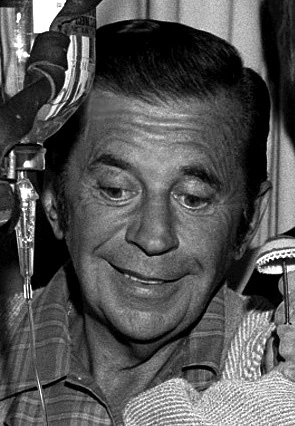
Which Morey Amsterdam are we talking about?

This is worth clarifying up front because the name is unusual enough that some readers do a double-take. Morey Amsterdam, full name Moritz Amsterdam, was born on December 14, 1908, and died on October 28, 1996. He was an American comedian, actor, writer, and producer, and he is best remembered today for playing Maurice "Buddy" Sorrell on "The Dick Van Dyke Show." That character was a sharp-tongued TV comedy writer, which mapped almost perfectly onto Amsterdam's own real-life career as a professional gag writer. He was, in the words of one obituary, a "supreme jokester" long before television came along.
Amsterdam started in vaudeville and nightclubs, moved into radio in the 1930s, then became one of the earliest television personalities when he hosted "The Morey Amsterdam Show" starting in December 1948. That show ran on CBS before moving to the DuMont Television Network and accumulating 71 episodes total. He later hosted "Broadway Open House," a late-night variety program that is widely considered a forerunner of the Tonight Show. He also appeared in films like "It Came From Outer Space" (1953) and "Machine Gun Kelly" (1958), and he was a legitimate songwriter, credited as the lyricist on several productions going back to the late 1930s. By the time he joined "The Dick Van Dyke Show" in 1961, he was already a veteran with decades of industry experience.
People search his net worth mostly because of renewed interest in classic television, because they encountered him through "Dick Van Dyke Show" reruns, or because they are researching the broader cast's financial legacies. It is a legitimate research question, and the answer requires some work to unpack responsibly.
What "net worth" actually means for a historical celebrity
Net worth is a simple concept: total assets minus total liabilities at a specific point in time. For a living celebrity, reputable outlets try to piece this together from property records, public company filings, reported deal values, and industry benchmarks. For someone who died in 1996, the process is more like forensic reconstruction. The inputs available are thinner, the data is older, and the inflation adjustments add another layer of interpretation.
Net worth sites aggregate whatever public sources they can find, including news archives, court records, industry databases, and secondary biographies, then fill gaps with assumptions based on comparable careers. That is why two sites can look at the same person and produce dramatically different numbers. One site might anchor to what Amsterdam was likely earning per episode on "The Dick Van Dyke Show" and extrapolate from there; another might look at a broader career timeline and use different inflation assumptions. Neither is "wrong" exactly, but neither is verified either. The figures are estimates, full stop, and good sites say so explicitly. As a general rule, any net worth estimate you see for a historical entertainer should be treated as an educated approximation rather than an audited fact.
How Amsterdam actually made his money

To assess any net worth claim credibly, you need to understand the income streams that fed into it. Amsterdam's career spanned roughly six decades, and the money came from several directions.
- Vaudeville and nightclub performance fees from the 1920s and 1930s, which were modest by later standards but established his professional standing.
- Radio hosting and writing fees during the 1930s and 1940s, when radio was the dominant entertainment medium and top talent earned meaningful income.
- Television hosting income from "The Morey Amsterdam Show" (CBS and DuMont, 1948-1950) and "Broadway Open House," both of which paid host fees and writing credits.
- A long-running cast salary on "The Dick Van Dyke Show," which ran from 1961 to 1966. Per-episode rates for supporting cast on major network shows in that era typically ranged from a few hundred to a few thousand dollars per episode, depending on billing and negotiating leverage.
- Film acting fees from multiple B-movie and mid-tier studio appearances spanning the 1950s and beyond.
- Songwriting and lyric royalties. Amsterdam had legitimate songwriter credits going back to the 1930s, including work as a lyricist on films. Royalties from songs and compositions can continue generating income long after the initial work is done.
- An executive role with American International Pictures, noted in a 1964 industry report, suggesting he had business income beyond pure performance.
The combination of writing, performing, producing, and songwriting over six-plus decades gives Amsterdam a broader income base than a performer who only acted. However, the television era of the 1960s paid supporting cast considerably less than today's residual-heavy contracts, and the pre-SAG-AFTRA royalty structures for older TV syndication were far less favorable to performers than modern agreements. That context matters when you are trying to figure out whether a $10 million estimate makes sense.
What different sources actually claim
Here is what the available estimates actually say, laid out so you can compare them directly.
| Source | Estimated Net Worth | Stated Basis / Methodology | Credibility Notes |
|---|---|---|---|
| Celebrity Birthdays / Net Worth Profile (updated Dec. 2023) | $5 million | References Wikipedia, Forbes, Business Insider as inputs; no itemized asset breakdown | Mid-range estimate; methodology is vague but sources cited are mainstream |
| NetWorthList | $1.5 million | Presented as an estimate; no audit trail or asset/liability detail provided | Lower-end figure; conservative but plausible for the era |
| The Husband Blog (Oct. 2024) | $10 million | Loosely tied to TV/film writing and live performance; no primary source documentation | Highest claim; lacks sourcing and likely inflated |
| Oreate AI Blog (2026) | ~$1 million at time of death (1996) | Framed explicitly as speculation; notes lack of reliable sources | Most conservative; honest about uncertainty; plausible for 1996 dollars |
The $10 million figure is almost certainly an outlier. Supporting cast salaries on 1960s network TV, combined with the royalty structures of that era, do not support that kind of accumulation unless there is documented evidence of major outside investments or business deals, and none has surfaced. The $1 million figure for 1996 is plausible in nominal terms, though it may undercount if Amsterdam held real estate or had meaningful songwriting royalty income that compounded over time. The $1.5 million to $5 million range feels most defensible given what we know about comparable mid-tier entertainment careers of that period.
Asset and lifestyle clues that inform the estimates

Net worth estimators working on historical figures typically look for a few categories of evidence beyond direct salary data. For Amsterdam, the types of assets that would realistically appear in any reconstruction include the following.
- Real estate: Entertainers working steadily in Los Angeles from the 1950s onward frequently owned property. Even modest holdings in areas like the San Fernando Valley would have appreciated significantly by 1996. Property records from LA County could theoretically surface details, though they are not always indexed in easily searchable databases for casual researchers.
- Songwriting royalties: Amsterdam's songwriter credits are documented going back to the 1930s. If any of his compositions received meaningful airplay or were licensed in later decades, royalty income would have continued. This is harder to quantify without access to ASCAP or BMI licensing records.
- Residuals from television syndication: 'The Dick Van Dyke Show' ran in syndication for decades. Pre-1960 and early-1960s contracts often had limited residual provisions, but any residual income, even small amounts paid annually, would have been cumulative over a 30-year syndication window.
- Business income from his American International Pictures executive role, which is documented in at least one contemporaneous industry source from 1964.
- Live performance fees: Amsterdam continued performing in nightclubs and on the comedy circuit after 'The Dick Van Dyke Show' ended. Performance income in the later decades of his career is not well-documented publicly but would be a legitimate component of any estimate.
None of these asset categories have been quantified from primary documents in any publicly available source. They are the types of assets estimators infer based on career type and era, which is exactly why the estimates vary so widely. If you are looking for context on how other entertainers from the same generation compare, William Morean's net worth profile offers a useful parallel case study in how wealth is reconstructed for figures who built careers across multiple entertainment income streams.
Why estimates differ so much, and how to spot a bad one
The range from $1 million to $10 million is a sign of genuine uncertainty, not careful research from multiple angles. Here is how to evaluate any specific claim you encounter.
- Check if the estimate is dated. A 2024 estimate in 2026 dollars needs to reflect updated assumptions, and a figure quoted for 1996 (the year of his death) is a very different number than one inflated to present value. Many sites do not clarify which they are reporting.
- Look for a stated methodology. Does the site explain what assets and liabilities it counted? If not, the number is guesswork dressed up as research.
- Check whether the figure is internally consistent with career history. A $10 million estimate for a supporting cast member working in 1960s television, with no documented major investments, should raise immediate skepticism.
- See if the source acknowledges uncertainty. Sites that say their figures are estimates and explain their limitations are more trustworthy than those presenting a single number as fact.
- Compare across multiple sources. If one site says $1.5 million and another says $10 million with no explanation for the gap, the most defensible position is somewhere in the lower-to-middle range, weighted toward sources that show their work.
This is not unique to Amsterdam. The same evaluation framework applies to any historical entertainer's wealth profile. For comparison, athletes who transitioned into entertainment or business, like Mario Williams, often have better-documented wealth because their contract values were reported publicly during active careers, which is a structural advantage historical performers like Amsterdam simply did not have.
How to actually verify and triangulate the number

If you want to go beyond the aggregator sites and build the most accurate picture possible, here is where to look and what to look for.
- Probate and estate records: When Amsterdam died in Los Angeles County in October 1996, his estate would have gone through California probate court. California probate records from that era can sometimes be accessed through the LA County Superior Court archives. These records, if retrievable, would give you a more grounded picture of what he actually held at death than any website estimate.
- Biographies and authorized accounts: Reputable published biographies of the Dick Van Dyke Show cast or era-specific entertainment histories sometimes include salary disclosures or financial anecdotes. These are secondary sources, but they are more reliable than aggregator sites.
- ASCAP and BMI databases: Amsterdam's songwriting credits are documented. ASCAP and BMI maintain public-facing artist search tools where you can confirm registered works. While royalty payment amounts are not public, confirming which songs were registered gives you a basis for estimating whether royalty income was a significant factor.
- Archive newspaper databases: Resources like ProQuest Historical Newspapers, Newspapers.com, and the LA Times archive have contemporaneous reporting on Amsterdam's career, contracts, and financial dealings. The Stars and Stripes archive, for instance, documented his involvement with American International Pictures in 1964.
- IMDb credits as a timeline anchor: IMDb's full filmography can help you build a career timeline and identify the years when Amsterdam was earning most actively, which you can then cross-reference with industry wage data from entertainment union archives.
- Celebrity net worth comparison sites used as starting points only: Treat sites like CelebrityNetWorth as a starting point for what the community believes, not as verified data. They are useful for flagging the range of estimates but should not be your final answer.
It is also worth understanding how names and identities can create research complications. For a figure like Amsterdam, whose estate would have been filed under his legal name Moritz Amsterdam, searching under just "Morey" may miss records. This kind of detail matters in primary source research. Similarly, if you are researching net worth figures for other business-oriented public figures with less celebrity-driven profiles, you may find that William Ma's net worth breakdown is a useful model for how documented business income can produce cleaner estimates than entertainment-only careers.
The most defensible bottom line
Given everything above, the most defensible estimated net worth for Morey Amsterdam at the time of his death in 1996 is in the range of $1 million to $5 million, with the middle of that range, around $2 million to $3 million, being the most reasonable central estimate when you account for career longevity, multiple income streams, and the general wealth accumulation patterns of his peer group. In 2026 dollars, adjusting for inflation from 1996, that range would be roughly $2 million to $9 million, though converting a speculative 1996 figure into a present-value estimate adds another layer of imprecision.
The $10 million figure circulating on some blog posts is not supported by any documented career evidence and should be treated with skepticism. The $1 million floor figure, while the most conservative, may undercount royalty and real estate contributions. For anyone doing serious research on historical entertainer wealth, the honest answer is that the record is incomplete, and the best you can do is triangulate a defensible range rather than settle on a single number. That is true for Amsterdam and for most entertainers of his era who did not have the kind of public financial exposure that modern celebrities experience.
If you are exploring net worth profiles of figures connected to similar eras or deal structures, the profile of Jack Morey offers an interesting contrast in how contemporary business figures accumulate and document wealth differently from mid-century entertainers, where the paper trail is thinner and the estimation methodology must work harder to produce a credible range.
FAQ
Why do “Morey Amsterdam net worth” numbers vary from $1 million to $10 million?
Because most estimates rely on indirect inputs (career timeline, typical pay ranges, and inflation assumptions) rather than a single primary net-asset accounting. Small changes to assumptions like TV residuals and royalty compounding can swing the present total by millions.
What would have to be true for Morey Amsterdam to plausibly reach $10 million?
You would generally need credible evidence of unusually large outside investments or business interests (for example, equity holdings, documented property acquisitions beyond what is typical, or high-value publishing contracts). Without that kind of documented asset trail, $10 million is likely an outlier.
Is the $1 million to $5 million range for Morey Amsterdam in 1996 dollars or today’s dollars?
The range discussed for his death year is typically expressed in nominal 1996 terms. Present-day conversions are usually an approximate inflation adjustment, not a reconstruction of what his assets would be worth today.
How do net worth estimators handle assets like real estate when primary documents are missing?
Many estimates treat real estate as a probability-based assumption (based on the era, income level, and peer behavior) rather than a documented property valuation. That’s a common reason two sites disagree, even when they start from similar salary guesses.
Do royalties from songwriting matter more than TV earnings for Morey Amsterdam?
They can, but only if the underlying publishing rights were significant and still paid out over time. For historical entertainers, the uncertainty is usually not whether royalties existed, but the size of the royalty base and how long it continued.
Could estate planning or taxes explain why the net worth is hard to verify?
Yes. Even if income was substantial during life, estate settlements, taxes, and distribution to heirs can leave fewer identifiable assets. Also, older estate records may be indexed under legal names, which makes retrieval incomplete.
How should I search for records if I only know him as “Morey” and not “Moritz Amsterdam”?
Use both names, including variations like “Moritz Amsterdam” and “Moritz” plus “Amsterdam,” and include spelling variants. Also search by estate or probate indexes, which can be filed under legal names rather than stage names.
Are net worth sites reliable for people who died before modern disclosure rules?
They can be useful for triangulating possibilities, but they are not audited. For mid-century entertainers, estimates should be treated as an educated range, not proof of wealth, because deal terms and asset valuations are rarely fully documented.
What’s the most defensible “central estimate” when I see competing numbers?
A reasonable approach is to pick a midpoint that aligns with conservative assumptions about network-era earnings and royalties, often something like the $2 million to $3 million band discussed for his death year, while treating extremes ($1 million or $10 million) as lower-probability scenarios.
How can I tell if a specific blog claim about Morey Amsterdam net worth is credible?
Look for whether the claim cites any concrete evidence beyond general reasoning, such as documented property ownership, specific contract values, or identifiable publishing income. Claims that rely mainly on broad “celebrity wealth” logic without asset support are usually speculative.