
The short answer: there is no credibly sourced, publicly verified net worth figure for Larry Mondello. What exists is a real person with a documented business history on Long Island, a handful of local news profiles, and at least one website throwing out a number so low ($1,000) it tells you more about that site's methodology than about the man himself. This article walks through what we actually know, how to build a reasonable estimate from available evidence, and why the numbers floating around online are not worth much without context.
Larry Mondello Net Worth: How to Verify Estimates Today

Marcus Holloway
6 Apr 2026
First, confirm which Larry Mondello you're researching

If you searched "Larry Mondello" and landed on a Wikipedia page, that article is about a fictional character: the chubby, lovable best friend of Theodore "Beaver" Cleaver on the classic TV series Leave It to Beaver, portrayed by actor Rusty Stevens. That Larry Mondello has no net worth because he does not exist outside a screenplay.
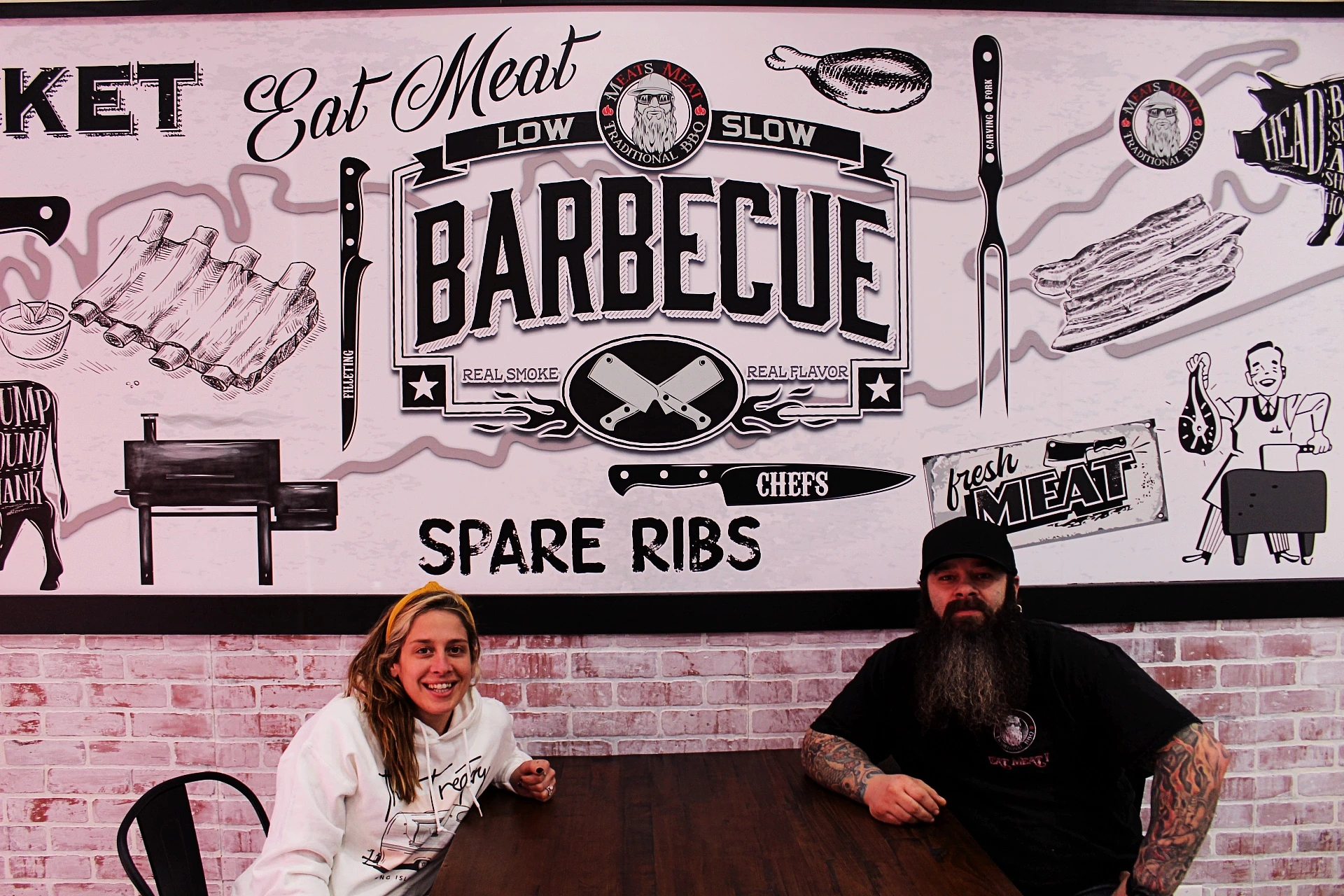
The real-world Larry Mondello relevant to a net worth search is a Long Island native, certified welder, and self-taught pitmaster who founded the BBQ brand Meats Meat in 2016. News 12 Long Island confirmed he built his own smokers from scratch before opening a takeout restaurant under his nickname "Meat's Meat" in Mattituck, New York. He started with a food truck in 2016, added a second truck in 2020, opened a brick-and-mortar storefront in Mattituck, and by April 2025 was co-owning Meats Meat BBQ Smokehouse/Tuckers Taproom alongside business partner Chris Hujber. That trajectory is what we're working with when we talk about his net worth.
What "net worth" actually means and how estimates get built
Net worth is simply total assets minus total liabilities. For a public company executive or a celebrity with disclosed earnings, you can piece together a reasonably tight estimate from SEC filings, salary disclosures, property records, and verified transactions. For a private small-business owner like Larry Mondello, almost none of those data points are publicly available, so any estimate is a model built on assumptions, not a calculation based on known numbers.
The standard approach for someone in Mondello's position involves three layers: (1) estimating business equity by applying a revenue multiple or earnings multiple common to the food-service industry, (2) adding identifiable hard assets like real estate, vehicles, and equipment, and (3) subtracting likely liabilities such as business loans, equipment financing, and lease obligations. Without access to his tax returns, balance sheet, or a voluntary disclosure, the result is always a range, not a precise figure. That transparency matters, and it's something Jonathan Moneymaker's net worth research illustrates well: even for more prominent figures, private wealth requires clear assumptions about what data is and isn't available.
The best available estimates right now

As of April 2026, no credible financial publication, verified celebrity net worth database, or public record source has published a documented estimate for Larry Mondello's net worth. One site (vipfaq.com) lists his net worth as "approximately $1,000 in 2026, based on users." That figure is not derived from any documented methodology, asset inventory, or financial analysis. It should be disregarded entirely. A crowdsourced guess with no supporting data is not an estimate; it's a placeholder.
What we can say is that the available evidence supports a working estimate range of roughly $200,000 to $800,000, with significant uncertainty on both ends. That range is built from the asset and income signals described in the next section. It is not a confirmed figure and should be treated as an informed inference only.
What's likely driving the estimate: income, assets, and business roles
Mondello's documented business footprint gives us several concrete inputs to work with, even if exact dollar amounts aren't disclosed.
Business equity in Meats Meat
Meats Meat has operated for roughly a decade, expanded from one food truck to two trucks plus a brick-and-mortar location, and now includes a co-owned taproom partnership. In the restaurant and food-service industry, small independent BBQ businesses typically trade at 1. 5x to 3x annual earnings (EBITDA) when they change hands.
Without revenue figures, we can use a rough top-down proxy: menu prices run from $14 to $16 for sandwiches, $19 per pound for pulled pork, $24 per pound for pulled chicken, and $30 per pound for brisket. A modestly busy storefront plus two trucks in a seasonal Long Island market could plausibly generate $300,000 to $600,000 in annual gross revenue.
After food costs (typically 28 to 35 percent for BBQ), labor, lease, and overhead, net margins in this segment often land between 5 and 15 percent. That implies annual profit somewhere between $15,000 and $90,000. Applying a modest 2x to 3x multiple puts business equity in the $30,000 to $270,000 range. That's a wide band, which is honest: we're missing too many inputs to tighten it meaningfully.
Hard assets: smokers, trucks, and equipment
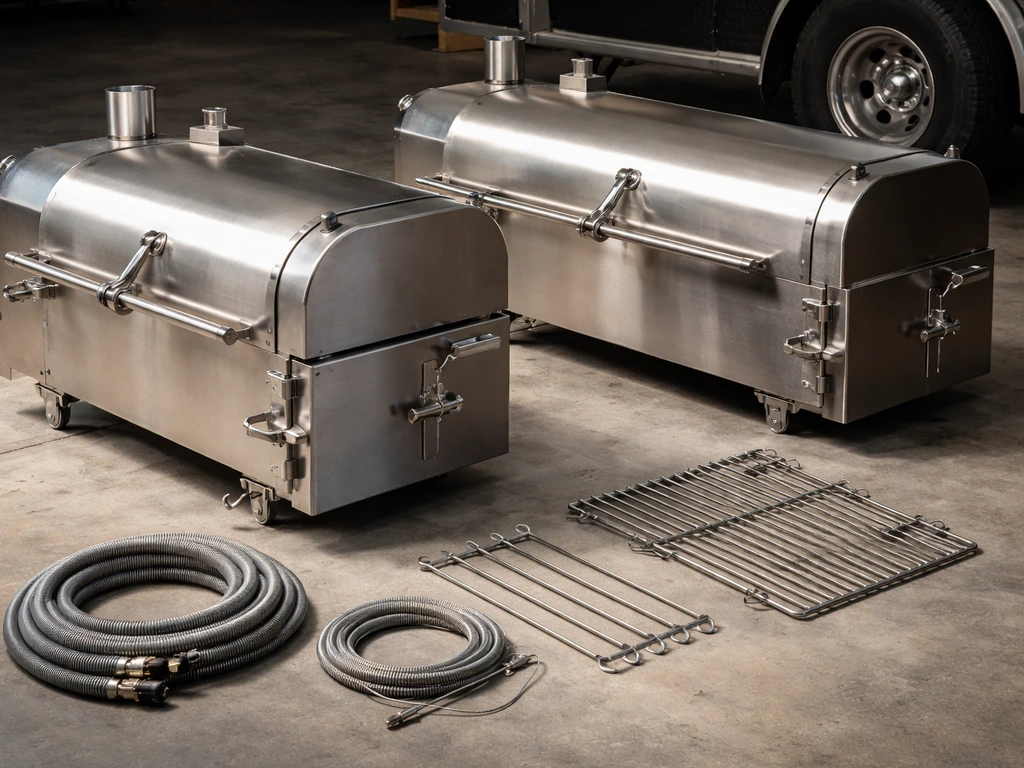
Mondello ordered a custom smoker built from a 16-foot-long, 1,000-gallon decommissioned propane tank through Texas-based Heirloom Pits. Custom competition-grade smokers of that scale typically cost between $15,000 and $50,000 new, though exact pricing was not disclosed. He is also a certified welder who builds smokers by hand, which means some equipment may carry a cost basis far below market value. Two operational food trucks, even used, add another $30,000 to $80,000 in estimated asset value. The Mattituck location also includes a leased yard and warehouse used for welding and truck customization, which is an operating liability (lease) rather than an owned asset.
Partnership and co-ownership signals
The Northforker reporting from April 2025 noted that Mondello and Chris Hujber "now own the business" following the reopening of Meats Meat BBQ Smokehouse/Tuckers Taproom. Co-ownership of an operating taproom adds another equity layer, though the split and valuation are unknown. Taproom and craft beverage businesses in the New York market have been valued at a range of multiples depending on license status, real estate, and revenue. This partnership is directionally positive for net worth but cannot be quantified without more disclosure.
Liabilities to factor in
Running a food operation of this size typically involves SBA loans or equipment financing, lease obligations, food service licensing costs, and ongoing operational debt. If Mondello financed his custom smoker, trucks, or the storefront buildout, those liabilities reduce net worth dollar for dollar. The leased storefront and warehouse also represent ongoing commitments that are liabilities in the cash-flow sense, even if they don't appear on a personal balance sheet.
Why different websites report such different numbers
Net worth estimate sites for private individuals tend to fall into two buckets: those that do actual research using property records, business filings, and financial reporting, and those that generate pages algorithmically with placeholder numbers to capture search traffic. For someone like Larry Mondello, who has no stock holdings, no disclosed salary, and no public financial filings, even the good-faith sites are essentially guessing. The $1,000 figure on vipfaq. Gridinsoft’s vipfaq.
com reputation check page likewise reports a trust score of 67/100, based on automated checks and security signals rather than verifying the accuracy of any specific content vipfaq. com is almost certainly the latter: a default or crowd-submitted value with no analytical backing. .
com is almost certainly the latter: a default or crowd-submitted value with no analytical backing.
The broader issue is that private small-business owners are genuinely hard to value from the outside. Unlike a celebrity whose film salaries are reported in trade press, or an executive whose compensation is disclosed in SEC filings, a regional BBQ operator's finances are almost entirely private. This same challenge applies across many private-sector figures tracked by net worth databases. For context, even well-documented agribusiness figures like those behind Monsanto's net worth history involve complex layers of private equity, acquisitions, and corporate restructuring that make point-in-time estimates difficult. For a sole proprietor or small LLC owner, the gap between reality and published estimates can be even wider.
Other common reasons estimates diverge include timing mismatches (a business valued in 2021 versus 2025 can look very different post-pandemic and post-expansion), differing assumptions about debt load, whether personal real estate is included, and whether the researcher counted business equity at cost basis or current fair market value. Some sites also conflate revenue with net worth, which dramatically inflates figures for business owners.
How to verify or refine the estimate yourself today

If you want to go beyond what's published and build a more grounded estimate, here is a practical research sequence you can follow today.
- Search the Suffolk County (New York) Clerk's property records database for any real estate owned in Mondello's name. Property ownership is the single most reliable publicly available asset indicator for private individuals. The Suffolk County Clerk's office has an online search tool at suffolkcountyny.gov.
- Look up New York State business entity filings at apps.dos.ny.gov. Search for "Meats Meat" or "Meat's Meat" to find the LLC or corporation registration, which will tell you entity type, registration date, and registered agent. It won't show financials, but it confirms the legal structure.
- Check the U.S. Small Business Administration's FOIA database and USASpending.gov for any PPP loans or federal business assistance tied to Meats Meat. Many small restaurants received PPP loans during 2020 to 2021 that are now disclosed publicly, giving a rough proxy for payroll size.
- Search the Suffolk County or New York State UCC (Uniform Commercial Code) filings for any secured debt instruments registered against Mondello or his business entities. Equipment financing and SBA loans typically appear here.
- Run a Google News search for "Larry Mondello Meats Meat" filtered to the past year to catch any new media coverage, award recognition, expansion announcements, or franchise activity that might shift the valuation assumptions.
- Check local business licensing records through the Town of Southold (which covers Mattituck) for any additional permits, liquor licenses, or catering licenses that indicate scale of operations.
- If you're trying to estimate revenue, look for Yelp or Google review volume as a rough proxy for customer traffic, then apply reasonable average ticket sizes based on the published menu prices to build a bottom-up revenue estimate.
None of these steps will give you a confirmed net worth number, but together they can meaningfully narrow the range. The same kind of stepwise verification approach is worth applying to any private individual. For example, independent producers in niche food sectors, like those behind a mustard producer's net worth, often require exactly this kind of ground-up research because no top-line figure exists in any database.
Comparing what we know against what the sites claim
| Source | Estimate | Methodology | Reliability |
|---|---|---|---|
| vipfaq.com (2026) | $1,000 | User-submitted, no documentation | Very low — disregard |
| This analysis (evidence-based, April 2026) | $200,000 – $800,000 | Business equity model + asset inventory + liability offset | Moderate — transparent assumptions, unverified inputs |
| Public property records (Suffolk County) | Not yet checked | Deeded real estate ownership | High if records found |
| SBA/PPP loan disclosures | Not yet checked | Federal lending data | High if loan on record |
| UCC filings | Not yet checked | Secured debt instruments | High for liability side |
The bottom line: a practical range and what to do with it
Based on everything documented and publicly available as of April 2026, a reasonable working estimate for Larry Mondello's net worth is somewhere in the range of $200,000 to $800,000. The lower end of that range reflects a scenario where business margins are thin, debt is significant, and the taproom partnership carries limited equity value. The upper end assumes the Meats Meat brand has built meaningful equity over a decade of operation, the smoker and truck assets are largely owned outright, and real estate ownership adds to the picture.
That range is wide because the inputs are genuinely uncertain. This is not unusual for private small-business owners. Even researchers tracking someone with a more public financial profile, like Tim Mondavi's net worth in the wine industry, have to contend with private company valuations that aren't disclosed. The mechanics are the same: no public filings means any number is an estimate built on assumptions, and transparency about those assumptions is the only honest approach.
If you need a single number for a quick reference, $400,000 to $500,000 is a defensible midpoint given the business scale and asset base visible in public reporting. But treat it as a starting point, not a fact. If you're doing this research for a specific purpose (due diligence, journalism, competitive analysis), run the public records steps outlined above before drawing any conclusions. The data exists to narrow this range significantly; it just requires a few targeted searches to access it. You can access Suffolk County land and document search services via the County Clerk’s “Search Online Records” link on the Suffolk County Government website.
FAQ
How do I tell whether an estimate should include personal assets or only the Meats Meat business? (assets on paper vs personal ownership)
Yes, but only with careful boundaries. If he personally owns real estate or equipment, personal net worth could be higher than “business equity only.” If the smoker, trucks, or storefront were held in an LLC, the assets may not count as personal assets unless ownership is documented (for example, personal property records or an LLC ownership filing that ties back to him).
Why do some net worth sites give one number even though the business might be split across LLCs?
Look for separate, documentable entities. Many restaurants run through multiple LLCs (restaurant entity, brand entity, real-estate entity, equipment-holding entity). A public records sweep should check business entity names tied to him, then trace each entity’s assets and liabilities, because a single “valuation” number often blends them incorrectly.
What’s the biggest mistake people make when estimating Larry Mondello net worth from revenue or social media buzz?
Because net worth and business value are not the same thing. A restaurant could have strong revenue while owner equity is low if cash flow is absorbed by debt service, lease payments, and working capital. A better check is to estimate EBITDA or owner-distributable profit and then apply a reasonable equity multiple, not a revenue multiple.
If no tax returns are available, what public signals can still help estimate liabilities accurately?
Treat tax returns as the gold standard, but there are limited substitutes. For example, you can infer debt and obligations by checking UCC filings (if available through your jurisdiction’s portal), mortgage records for any personal or entity-owned property, and any recorded liens. Without these, the same business earnings can correspond to very different net worth outcomes.
How does the timing of truck openings and the taproom affect Larry Mondello net worth estimates?
Expansion timing matters. If Meats Meat grew sharply around 2020 to 2025, asset purchases and debt from that period may not have fully translated into current equity. A “point in time” net worth can swing depending on whether you’re valuing before or after equipment paid down, rent deposits, or lease buildout costs.
If he co-owns the taproom, how should that change a net worth calculation?
Co-ownership can reduce or increase personal net worth depending on the ownership split and how much equity each partner contributes. If he is a co-owner of the taproom and also holds ownership in other related entities, your model needs separate equity shares by entity. A single blended percentage is usually too simplistic.
What quick checks can I do to decide whether a published “Larry Mondello net worth” number is credible or just traffic bait?
The $1,000 type of figure should be treated as non-credible because it’s not tied to an asset or debt inventory and often relies on user submissions or defaults. A quick test is whether the source explains methodology with evidence types (property records, filings, transactions). If not, discard it.
Should I value trucks and smokers at purchase cost, or at current market value, for Larry Mondello net worth estimates?
Yes, sometimes. If the LLC owns equipment and vehicles, those assets may be capitalized at cost on business books rather than market value. Also, used food trucks can be far below replacement cost. A defensible estimate either (a) uses market-value ranges for major assets, or (b) clearly states it is using cost-basis assumptions and stays conservative.
Can business debt reduce Larry Mondello net worth even if it’s held by a company/LLC?
If he personally guarantees business loans, liabilities can flow into personal net worth even when the business entity is separate. Public records that show liens or loan collateral tied to him personally, or any court filings involving guarantees, are key if you want to avoid underestimating liabilities.
What’s a practical step-by-step workflow to narrow the $200,000 to $800,000 range?
Start by deciding your scope, then narrow inputs. For example: (1) list all likely entities connected to him, (2) compile any property ownership or business location records, (3) estimate revenue or profit using operating clues, and (4) estimate asset values and debt separately, then apply a range with explicit assumptions. This avoids mixing revenue with net worth and reduces the usual overconfidence problem.