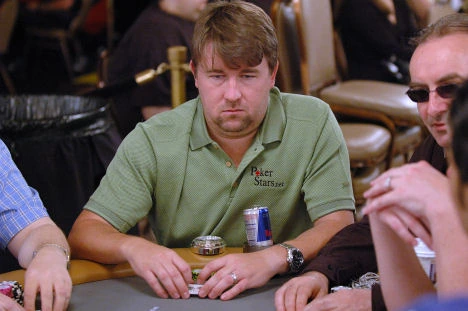
If you are genuinely searching for a private individual named Jonathan Moneymaker, no reliable public net worth data exists for such a person in credible financial reporting, poker databases, or business registries as of April 13, 2026. Private individuals are not tracked by net worth aggregators, so no meaningful estimate is possible. Everything below refers to Chris Moneymaker.
The net worth estimate: what the numbers say right now

As of April 13, 2026, Chris Moneymaker's estimated net worth sits in the range of $2 million to $4 million, with a central working estimate around $3 million. That range reflects the realistic spread across different methodologies and the significant uncertainty in his post-PokerStars income. Here is what the scenarios look like depending on how well his current ambassadorship and appearances are performing:
| Scenario | Estimated Net Worth | Key Assumption |
|---|
| Conservative | $1.5M – $2M | Limited appearance income; minimal ongoing sponsorship value after PokerStars split |
| Base case | $2.5M – $3.5M | Steady Americas Cardroom deal, regular tournament appearances, licensing income |
| Optimistic | $4M – $5M | Strong brand monetization, equity stakes in poker ventures, business income growth |
The 2003 WSOP Main Event first-place prize was $2.5 million before taxes. That single event is the anchor of any Moneymaker net worth discussion. After federal and state taxes (he was based in Tennessee, where there is no state income tax on wages but federal rates would apply), the after-tax take was likely in the range of $1.6 million to $1.8 million. Everything built since then has come from sponsorships, tournament play, and brand work rather than one dramatic windfall.
How Chris Moneymaker makes his money
Moneymaker's income streams are relatively transparent compared to many public figures because poker sponsorships and tournament results are publicly reported. His career breaks into three distinct phases: the post-win windfall period (2003 to roughly 2006), the long PokerStars ambassador era, and his current role with Americas Cardroom.
The PokerStars era (2003–2020)

Before he became a household name in poker, Moneymaker was working as an accountant when he turned an $86 PokerStars satellite entry into a seat at the 2003 WSOP Main Event and then won the whole thing. PokerStars signed him almost immediately after that win, and [the partnership ran for 17 years before ending in 2020. ](https://www. pokernews.
com/news/2020/12/moneymaker-pokerstars-end-17-year-partnership-38479. htm) During that stretch, he appeared in TV commercials, served as a brand ambassador, attended live promotional events worldwide, and was prominently featured in PokerStars marketing material well into the late 2000s and beyond. Ambassador deals at that level with a major poker platform historically pay anywhere from $200,000 to over $1 million annually depending on exclusivity, appearance minimums, and brand value.
Moneymaker's deal was long-running and his name recognition was high, so the PokerStars relationship almost certainly represented the largest sustained income source outside of his 2003 prize.
Americas Cardroom and the current chapter
After his 17-year run with PokerStars ended in late 2020, Moneymaker joined Americas Cardroom as an ambassador. Americas Cardroom is a U.S.-facing online poker site, which means a different audience and likely a different deal structure than PokerStars. The move was covered as significant news in the poker community, with Poker.org describing it as a major signing for Americas Cardroom, which signals the platform invested meaningfully to bring him on. Ambassador fees for U.S.-facing platforms tend to be lower than PokerStars-level deals, but they still represent meaningful ongoing income for a recognizable name.
Tournament earnings, appearances, and speaking
Moneymaker's live tournament winnings beyond his 2003 Main Event are modest in the context of professional poker. His total recorded live tournament earnings are under $4 million across his career, but a significant chunk of that is the 2003 prize. You can verify his live tournament cashes and all-time earnings directly using The Hendon Mob’s poker database [total recorded live tournament earnings](https://www. thehendonmob.
com/). He continues to play in WSOP events, including appearing in 2021 WSOP records, and participates in celebrity and charity poker events that carry appearance fees. Poker Hall of Fame inductees (he was inducted in 2019) often command speaking and appearance fees at industry conferences, casino events, and poker training platforms. These fees are not publicly disclosed but are a real income stream.
What assets likely make up his net worth

Net worth is assets minus liabilities, not just income. For someone in Moneymaker's position, the asset picture probably includes the following categories, though exact figures are not publicly available:
- Primary residence: Moneymaker is associated with Tennessee. Tennessee real estate is generally more affordable than coastal markets, so a primary home there might be valued in the $400,000 to $1 million range depending on location and upgrades made since 2003.
- Investment and savings accounts: Post-tax prize money and years of ambassador income, if reasonably managed, would translate to liquid or semi-liquid investment holdings.
- Poker bankroll: Active players maintain poker-specific capital separate from personal net worth. This fluctuates with play.
- Brand licensing and intellectual property: The "Moneymaker" name carries genuine brand value in the poker world and may generate passive licensing income through merchandise, content deals, or book royalties.
- Business interests: No major separate business ventures are publicly documented, but poker personalities at his level sometimes hold minor equity in training sites, poker apps, or event companies.
On the liability side, taxes owed on ongoing income, any mortgage on real estate, and the normal costs of running an active poker and travel-heavy professional life would reduce the gross asset total. Liabilities for someone at this income level are unlikely to be catastrophic unless there have been undisclosed legal or financial issues, none of which appear in public records.
Where the estimate comes from and why different sites show different numbers
Net worth estimates for figures like Moneymaker are assembled from several types of inputs, none of which are perfectly precise. Understanding where the number comes from helps you judge how much to trust any figure you see, including the range in this article.
- Tournament prize records: These are public. The Hendon Mob database and WSOP official records show verifiable winnings back to the 1990s. This is the most reliable single data input.
- Sponsorship deal estimates: Ambassador and endorsement deals are almost never disclosed in full. Estimates are based on comparable deals reported in the industry, platform size, and the ambassador's public profile. These carry the most uncertainty.
- Public interviews and media coverage: Moneymaker has given interviews discussing his career arc, the end of his PokerStars deal, and his current work. These provide qualitative context but rarely include specific dollar figures.
- Property and asset records: Public property records in Tennessee can show real estate purchases and assessed values. These are searchable but not always current.
- Hall of Fame status and appearance history: Induction in 2019 into the Poker Hall of Fame and continued tournament participation confirm ongoing industry relevance, which supports the higher end of income estimates.
- Third-party net worth sites: Many aggregator sites recycle a single estimate without updating it, so a figure from 2015 may still appear on multiple pages in 2026. Cross-referencing and looking for the most recently dated estimate is important.
Estimates vary across websites for several predictable reasons: different sites use different base years for the prize money calculation, some include gross tournament winnings without adjusting for buy-ins and taxes, and ambassador deal valuations are essentially guesses anchored to different comparables. A site citing $10 million is almost certainly working from an inflated or unadjusted gross figure. A site citing under $1 million is likely ignoring the sponsorship income that defined two decades of his professional life.
It is worth noting that net worth estimation for individuals in niche professional industries like poker differs from estimating wealth for, say, Tim Mondavi, where winery valuations and estate holdings provide clearer asset anchors. Poker income is fluid, irregular, and partially undisclosed, which is why the range on any estimate has to be wide.
How to verify or update this estimate yourself

If you want to do your own due diligence on Moneymaker's net worth, here is exactly where to look and what signals to watch:
- Check the Hendon Mob database (thehendonmob.com) for his full live tournament earnings history. This is the most authoritative public source for poker winnings and is regularly updated.
- Review WSOP official results and entry records for recent Main Event and side event participation. Entry fees and cashes are documented and publicly posted.
- Search Tennessee property records (available through county assessor websites) for real estate holdings in his home state.
- Monitor poker media outlets like PokerNews and Poker.org for any new sponsorship announcements, brand deals, or career updates. These sites break ambassador deals when they happen.
- Look for recent podcast appearances and interviews, which Moneymaker does regularly. Hosts occasionally ask about career earnings or business activities, providing qualitative data points.
- Cross-reference multiple net worth aggregator sites, noting the publication or update date on each. Discard any figure that has no clear update date or that appears to be copied from a single source.
- Watch for news around Americas Cardroom events and promotions, since his continued visibility there is a proxy indicator that his ambassador deal is active.
One practical tip: if you are comparing net worth figures across aggregator sites, treat any estimate that rounds to a clean number like $5 million or $10 million with extra skepticism. Round numbers almost always mean the site is estimating loosely rather than working from specific documented inputs.
To put the $2.5 million to $3.5 million base estimate in context, it helps to benchmark against similar public figures. Poker Hall of Famers with heavy sponsorship careers but limited high-level tournament results in later years tend to land in the $2 million to $10 million range depending on how well they managed early windfalls and how active their current business interests are. Moneymaker's specific situation is shaped by the fact that his one massive win came early and was partially offset by decades of active tournament play (with the associated buy-in costs) and a lifestyle tied to the poker world.
It is also useful to think about his wealth relative to people who built wealth through entirely different mechanisms. For instance, a successful mustard producer or food industry entrepreneur would have hard assets like equipment and intellectual property that net worth estimators can more precisely value. Poker wealth, by contrast, is heavily income-based and lacks the fixed asset base that makes wealth estimates more reliable.
Among poker personalities who turned a single breakout moment into a long sponsorship career, Moneymaker is one of the more durable examples. Many players who peaked in the early 2000s poker boom saw their income dry up as the industry shrank after 2011's "Black Friday" (when the U.S. Department of Justice shut down major poker sites). The fact that he secured a new ambassador deal with Americas Cardroom after leaving PokerStars suggests his brand still holds real market value even 20-plus years after his breakthrough.
For broader comparative context, consider how wealth in niche industries compounds differently from mainstream celebrity wealth. Someone like Larry Mondello, for example, represents a very different wealth profile shaped by entertainment industry economics. Meanwhile, even corporate figures in adjacent industries, such as those tied to agricultural giants like Monsanto, accumulate wealth through equity and institutional structures that dwarf anything available to an individual poker ambassador. Moneymaker sits squarely in the individual-talent, personal-brand category, where income is personal, not institutional.
The bottom line on reliability
The $2. 5 million to $3. 5 million central range for Chris Moneymaker's net worth as of April 2026 is grounded in documented tournament history, credible industry reporting on his ambassador deals, and reasonable assumptions about asset accumulation over a 20-plus year career. It is an estimate, not a verified figure, and it should be treated as such.
The single biggest variable that could move the number significantly in either direction is the terms and duration of his Americas Cardroom deal, which is not publicly disclosed. If new reporting surfaces about that deal, or if Moneymaker makes a major real estate purchase or business investment that enters the public record, this estimate should be updated accordingly. That is how good net worth research works: it stays current and corrects itself when better data becomes available.