
The most credible estimate puts Rowland Hussey Macy's personal estate at somewhere between $500,000 and $1.5 million at the time of his death in March 1877, which translates to roughly $15 million to $45 million in today's dollars depending on the inflation index you use. That range is honest: the high end reflects the likely value of his partnership equity and accumulated assets, while the low end reflects what may have been formally probated as liquid or titled property. A single, precise number is not defensible given the current state of publicly accessible records, and any website citing a clean figure without citing primary sources should be treated with skepticism.
Rowland Hussey Macy Net Worth: Estimate and Sources

Marcus Holloway
15 Apr 2026
Who Rowland Hussey Macy was and why people search his name

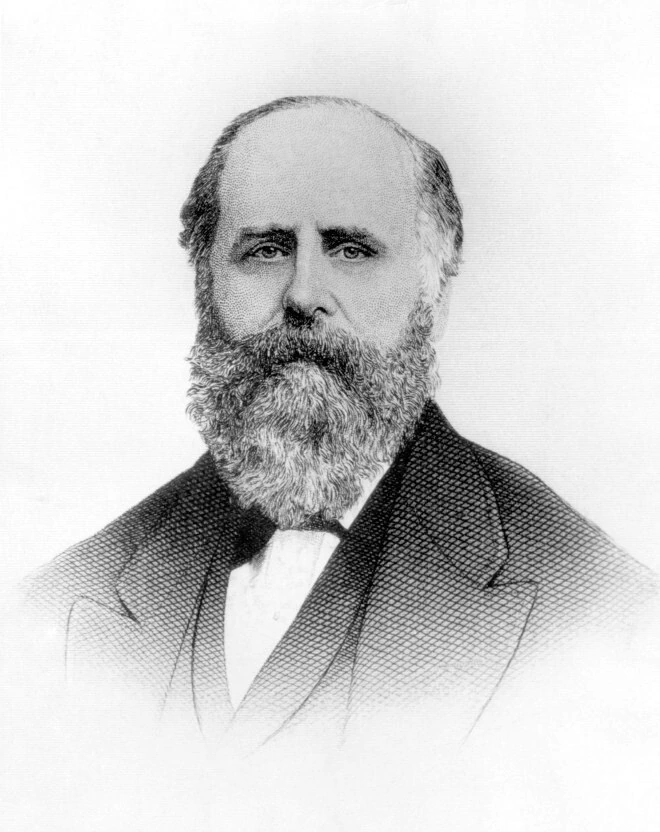
Rowland Hussey Macy was born in 1822 on Nantucket, Massachusetts, went to sea on a whaling ship at age 15, and eventually found his calling in retail. After several failed store attempts in New England and California during the Gold Rush era, he opened a dry-goods store at Sixth Avenue and 14th Street in New York City in 1858. That store became R.H. Macy & Co., one of the most recognized retail brands in American history. Macy died in Paris in March 1877, leaving behind a business that would eventually become a retail empire, though at the time of his death it was still a single large store operating under a partnership structure.
People search his net worth for a few different reasons: some are curious about the personal fortune behind a famous brand name, some are students or researchers working on business history, and some have just seen a modern Macy's and wondered what the founder was actually worth. The honest answer requires separating the man's personal wealth from the brand's eventual scale, because Macy never lived to see his store become a department store giant. He died while the business was still growing, and his equity stake at death is not the same as what the Macy's brand is worth today.
Estate value vs. personal wealth: what "net worth" really means here
When we talk about net worth for a 19th-century figure, we are almost always talking about one of three things: the probated estate (what was formally valued and distributed after death), personal wealth during life (accumulated savings, real estate, and investments), or business equity (the value of an ownership stake in a going concern). These three numbers can be very different, and conflating them is where most online estimates go wrong.
Macy's probated estate is technically the most documentable figure, because probate proceedings in New York State generated formal records including wills, letters testamentary, inventories, and accountings. New York State Archives describes Surrogate’s Court records as including wills, letters testamentary/administration, petitions for probate, property inventories, and executor/administrator accountings probate proceedings in New York State generated formal records including wills, letters testamentary, inventories, and accountings. His will was probated on May 1, 1877, and the New York Times reported on its contents at the time. The will included specific bequests of personal and household items to his wife, which suggests the document was structured in a fairly standard manner for the era. However, the probated estate may not capture the full economic picture: partnership interests, for example, are often transferred or dissolved outside of probate, meaning Macy's ownership stake in the store may not have been fully reflected in the estate filing's headline value.
In 1875, Macy took on two partners: Robert M. Valentine and Abiel T. La Forge. This means that by the time he died in 1877, Macy held a partial ownership interest in the business, not 100%. The value of that stake depends on what the partnership was worth at the time, which requires its own estimation. After his death, ownership transitioned within the Macy family before the Straus brothers eventually acquired a controlling interest. That transition history matters for net worth research because it tells you the business had substantial value, but pinning a precise number to Macy's personal share at the moment of his death is genuinely difficult.
Where to actually find credible source material

The single most direct path to a verifiable figure is the New York State Surrogate's Court. Probate records for Macy's estate would have been filed with the New York County Surrogate's Court, and the state maintains a searchable digital index through the WebSurrogates FileSearch portal. You can search by party name and narrow results using the date of death, which for Macy is March 29, 1877. The case file, if accessible, would include the will itself, any inventory of assets, and the final accounting of the estate, all of which together give you the closest thing to a documented net worth.
The New York County Surrogate's Court also provides mail-search instructions for researchers who want to request a formal records search. There is a fee, and the court notes that probate records do not exist for every individual, but for someone of Macy's public profile and business prominence, a probate filing almost certainly exists. The New York State Archives separately describes the relevant record groups: wills, inventories, and other documents from the New York County Surrogate's Court covering 1787 through 1879 are part of its holdings, which means Macy's 1877 estate filing falls squarely within the available range.
Beyond probate records, secondary sources worth consulting include the National Register of Historic Places designation report for the R.H. Macy & Co. store, which summarizes Macy's biographical and business timeline using reputable interpretive scholarship. The Library of Congress indexes historical biographies and manuscripts relevant to major 19th-century merchants, though no direct estate-total figure for Macy has surfaced in their publicly digitized holdings as of this writing. Contemporary newspaper reporting is also a useful source: 19th-century papers regularly reported probate valuations when estates were filed, and the New York Times archives from 1877 are worth searching specifically for estate-value language around Macy's name.
How to turn historical records into a net worth estimate
The methodology for estimating a 19th-century figure's net worth follows a fairly consistent process when you approach it rigorously. You start with the probated estate value if available, then add back any assets that would have been transferred outside of probate (partnership interests, jointly held property, trusts), then subtract known liabilities. From there, you apply an inflation adjustment to translate the historical dollar figure into a modern equivalent.
- Locate the probate filing: Search the New York County Surrogate's Court records for a case file opened on or shortly after March 29, 1877. The file should contain a will, inventory, and final accounting.
- Identify non-probate assets: Research the 1875 partnership agreement to understand what share of the business Macy held and how that equity was valued or transferred at his death.
- Check real estate records: Deed records for New York County would show any real property Macy personally owned, which would be listed separately from business assets.
- Find newspaper reporting: Search the New York Times and other major papers from April and May 1877 for estate-value reporting, which was common practice for prominent merchants at the time.
- Apply inflation adjustment: Use the CPI or GDP deflator to convert the historical figure. One dollar in 1877 is roughly equivalent to $28 to $32 today, depending on the conversion method.
- Document your confidence level: Note which figures come from primary sources (probate documents, deeds) versus secondary sources (biographies, newspaper summaries) versus tertiary sources (websites citing other websites).
The inflation conversion step deserves a specific note. Most mainstream inflation calculators put $1 in 1877 at roughly $28 to $32 in 2026 dollars using the Consumer Price Index. If Macy's estate was valued at, say, $600,000 at probate, that translates to somewhere between $17 million and $19 million today. If you include estimated partnership equity that may not have been captured in the formal probate value, the adjusted figure could reasonably exceed $30 million. The honest answer is that the conversion range is wide because the underlying historical figure itself carries uncertainty.
What the available data suggests about Macy's assets

Macy's store opened in 1858 with first-day sales of $11. For Macy’s 1858 store, contemporaneous first-day takings are preserved/referenced as $11.06 on October 28, 1858. 06. By the end of that first full year, annual sales had grown to approximately $85,000, which was a meaningful retail operation for the time. By the 1870s, the store had expanded substantially, and Macy was one of the more prominent dry-goods merchants in New York. That commercial scale is the most useful indirect indicator of his personal wealth, because the owner's equity in a profitable retail partnership of that size in 1870s New York would have been significant.
Real estate holdings are another likely component of Macy's estate. The store's physical expansion, along with the broader Manhattan real estate market of the 1870s, means that property interests, whether personal or through the business, would have contributed to his total wealth. Secondary sources like historical blog research into Manhattan property records point toward the value of searching deed indexes for Macy's name alongside the probate search, since real property transactions sometimes surface details that probate filings omit.
What is less documented is the personal investment portfolio, if any. Many successful 19th-century merchants held bonds, stocks in railroads or other enterprises, and personal loans. Without a formal estate inventory that lists these assets line by line, we cannot confirm or deny their existence for Macy specifically. This is a genuine gap in the publicly available record, and it is the main reason why a precise single-number estimate is not responsible.
Context: how Macy's wealth compares to peers and to the business itself
To put Macy's estimated wealth in context, it helps to compare him to other prominent merchants and businessmen of the same era. The comparison is cleaner when you look at people working in similar industries and on a similar scale, rather than comparing him to the great industrialists of the Gilded Age like Rockefeller or Carnegie, who were operating on an entirely different financial order of magnitude.
| Figure | Era | Estimated Estate/Wealth at Death | Approx. 2026 Equivalent | Source Confidence |
|---|---|---|---|---|
| Rowland Hussey Macy | Died 1877 | $500K–$1.5M (estimated) | $15M–$45M | Low–Medium (probate not yet confirmed) |
| A.T. Stewart (dry-goods merchant) | Died 1876 | ~$50M | ~$1.4B | High (well-documented estate) |
| John Wanamaker (retailer) | Died 1922 | ~$20M | ~$350M | High (documented) |
| Marshall Field (retailer) | Died 1906 | ~$140M | ~$4.7B | High (documented) |
The comparison makes clear that Macy was a successful and well-off merchant, but not in the same tier as Alexander Turney Stewart, who was arguably the dominant dry-goods merchant in New York during overlapping years and whose estate at death dwarfed most contemporary retailers. Macy died relatively early, before his store had reached the scale it would achieve under later ownership. His wealth was real and substantial for the time, but the Macy's brand that generates billions in revenue today was built largely after his death. That distinction matters when readers come to this topic expecting a Gilded Age fortune and find a more modest, though still significant, historical estimate.
It is also worth noting that researchers who study business wealth in this period often encounter similar challenges when looking at related figures. For instance, estimating the net worth of business-connected families in the broader Massey family of industrialists, such as Walter Massey or Harvey Massey, involves the same challenge of separating personal wealth from business equity in family-held or partnership-structured enterprises. The methodological problem is consistent across 19th- and early 20th-century merchant and industrial wealth.
How to verify or challenge any net worth figure you find

If you have seen a specific number for Macy's net worth on another website, the first question to ask is: what primary source does that number come from? Most net worth aggregator sites do not cite probate records, estate inventories, or scholarly biographies with documented financial figures. They often cite each other in a chain that traces back to a single unsourced estimate. That does not mean the number is wrong, but it does mean you cannot treat it as verified.
A credible verification process looks like this: the primary claim should trace back to either a probate document (listing estate value in dollars), a contemporaneous newspaper report quoting that document, or a scholarly biography that cites the primary record and provides a page reference. If the source chain stops at a website that says something like "estimated net worth" without any linked evidence, the figure is speculative. That is not a reason to dismiss it entirely, but it is a reason to treat it as a rough approximation rather than a researched finding.
The same standard applies to inflation-adjusted figures. A conversion from 1877 dollars to modern equivalents is only as good as the underlying historical dollar figure. If the base figure is unverified, multiplying it by an inflation factor does not make it more accurate, it just makes it look more precise. Always trace back to the pre-adjustment number first.
For researchers who want to go deeper, the methodology used for well-documented business families can serve as a useful template. Looking at how analysts approach the net worth of figures like Karl Massey or the collective wealth of family-held enterprises like the Maschhoffs illustrates how partnership equity and business ownership get separated from personal liquid assets in historical wealth research. The same framework applies to Macy: start with what is documented, layer in estimates for what is inferrable, and clearly flag what remains unknown.
What confidence level should you assign to Macy's net worth estimate?
Based on the currently accessible public record, I would assign this estimate a low-to-medium confidence rating. The reasoning: we know the store was commercially significant and growing, we know Macy held a major partnership interest as of 1875, and we know his estate was probated in 1877 with a documented will. Those facts support a meaningful estate. But without a confirmed probate inventory or estate accounting that lists total asset values, the exact dollar figure remains estimated rather than documented. The range of $500,000 to $1.5 million at death is based on reasonable inference from business scale and era context, not from a retrieved probate file.
Confidence would increase substantially if a researcher successfully retrieved the Surrogate's Court file from the New York County records covering the 1877 probate proceeding, or if a contemporaneous newspaper account quoting the estate's appraised value were located in the New York Times 1877 archives. Either of those primary sources would allow a much narrower and more defensible estimate. Until then, treat any specific single number you see online as a reasonable approximation that has not been independently verified against primary records.
FAQ
If I see a single “exact” number for Rowland Hussey Macy’s net worth online, how can I quickly tell whether it is reliable?
Check whether the source identifies a primary record (probate inventory/estate accounting) or a contemporaneous newspaper quote with an appraised value. If it just says “estimated net worth” with no probate or document reference, treat it as a re-used guess and assume the figure could be missing partnership-transfer details.
What’s the difference between Macy’s “probated estate” value and his personal net worth, and which one should I use?
Probate reflects what was valued and handled through the estate process, it can omit assets handled outside probate (including partnership interests or jointly held property). If your goal is a defensible figure, start with the probated estate, then separately model likely missing components rather than calling one number “net worth.”
How do I estimate the value of Macy’s partnership interest when probate may not fully capture it?
Look for evidence of the partnership terms and timing (for example, whether the partnership was dissolved, continued, or transferred after his death). Then use any available contemporary valuation clues (such as inventory of assets, store worth appraisals, or accounting notes in the Surrogate file) to avoid assuming the store’s later success equals his 1877 stake.
Would using different inflation calculators or indexes change the “today’s dollars” result a lot?
Yes. The article notes the conversion can vary by index and method, so two calculators can yield different modern equivalents even if the historical amount is the same. The practical step is to report a range tied to the same base value from probate, rather than presenting one inflated number as certainty.
Could Macy’s net worth estimate be understated if the estate inventory is incomplete or missing assets?
It can. If the available probate file lacks a full line-item inventory, or if certain economic interests were handled outside probate, the headline estate value may exclude them. A careful approach is to flag what is unknown and only add estimated components that you can support with documents or clearly stated assumptions.
If I want to request the Surrogate’s Court records, what should I look for in the case file?
Prioritize the probate inventory and the final accounting (not just the will). The inventory often reveals asset categories and dollar amounts, while the accounting can show receipts and distributions that help confirm totals or reveal liabilities that affect net worth.
Do deed records or Manhattan property indexes help with Macy’s net worth research, and what can they and cannot do?
They can help identify real estate holdings and ownership changes that probate might not detail fully. However, deeds alone do not give a complete personal net worth because they generally do not capture non-real-estate assets (like bonds or investment holdings) or business-equity value without additional accounting records.
How should I treat mentions of Macy’s wealth in biographies or historic summaries that do not quote figures?
If a biography gives a qualitative statement (for example, “wealthy” or “successful”) without a quoted dollar amount tied to a source page, it cannot verify a net worth figure. Use those sources for context, then rely on probate or contemporaneous reporting for the numbers.
What is the most common mistake people make when comparing Macy’s wealth to later Gilded Age magnates?
They assume store-founder wealth scales similarly to industrial empires. Macy died before the company became a large department-store operator, so comparing his 1877 personal stake to the later brand’s billion-dollar revenue leads to a mismatch between his era’s equity reality and modern corporate outcomes.
Why might probate valuation and newspaper reporting not match exactly?
Newspapers sometimes paraphrase, summarize, or report partial components (like a headline appraised amount) rather than every line-item from an inventory. If you are reconciling sources, compare the dates and whether the report describes appraised value, net value after debts, or a component such as household bequests.
If I only find Macy’s will but not the full inventory or final accounting, can I still produce a credible estimate?
You can produce a “minimum documented” estimate anchored to whatever dollar figures appear in the available documents, but you should label it as incomplete. The article’s framework implies confidence stays low-to-medium until you can tie the estimate to a total asset valuation and, ideally, settlement of liabilities.
Is there a practical checklist I can follow to build my own Macy net worth range responsibly?
Yes: (1) extract the probate appraised totals you can document, (2) list assets likely outside probate (partnership equity, jointly held property) and only add them if you find supporting evidence, (3) subtract known or documented liabilities, (4) convert using one inflation index with transparent math, and (5) present results as a range with stated confidence tied to which records you actually reviewed.