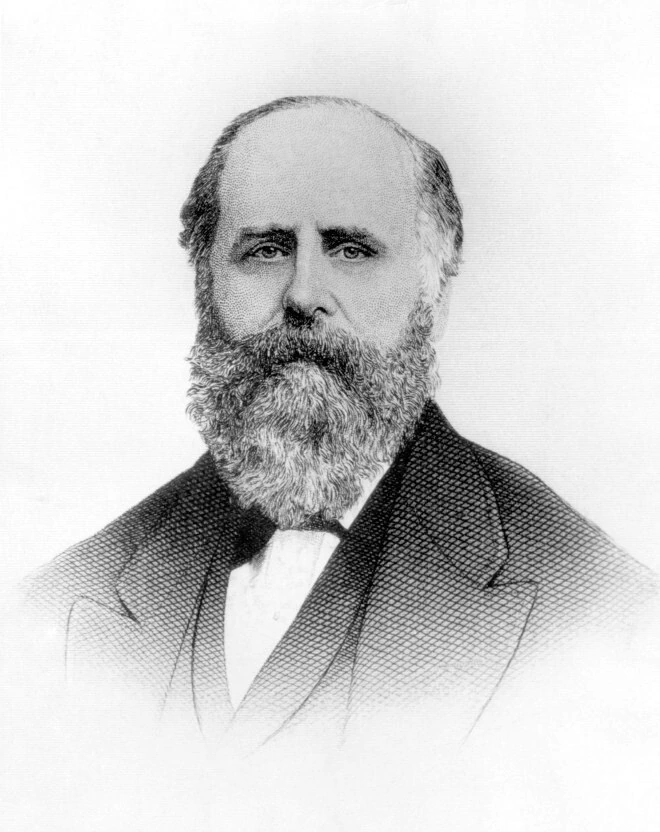
When people search 'the Maschhoffs net worth,' they're almost always asking about the Maschhoff family of Carlyle, Illinois, specifically Ken and Dave Maschhoff (and their wives Julie and Karen), who together own and operate The Maschhoffs LLC, one of the largest family-owned pork production businesses in North America. Because the company is privately held and no public financials are available, there's no single verified number. That said, based on the company's scale, asset base, and comparable private agribusiness valuations, a reasonable estimate for the collective Maschhoff family net worth falls in the range of $500 million to $1.5 billion, with the midpoint likely somewhere around $700 million to $1 billion depending on current commodity markets, debt levels, and how you value the underlying business.
The Maschhoffs Net Worth Estimate and How It’s Calculated


What 'The Maschhoffs net worth' actually refers to

The Maschhoffs is a family business with roots going back to 1851 in southern Illinois. The modern company, legally structured as The Maschhoffs LLC, is primarily associated with Ken Maschhoff (chairman of the board and co-founder in the modern sense) and his brother Dave Maschhoff, along with their respective wives Julie and Karen. Ken has been publicly identified by the National Pork Producers Council as a fifth-generation pork producer, and both he and Julie were inducted into the NPPC Hall of Fame in March 2026. The company operates through a broader holding group that includes Maschhoff Family Foods and subsidiaries like Acuity Ag Solutions, meaning the 'Maschhoffs net worth' question is really about the equity value held collectively by this family across that entire business structure, not just one person.
This is worth clarifying upfront because some net worth searches conflate the individual family members. For most estimation purposes, Ken Maschhoff is the most publicly documented individual and the one whose name appears in SEC-adjacent filings and industry board roles, so estimates often anchor to him. But the family owns the business collectively, and the Illinois Business Journal and other trade sources confirm that Ken, Dave, Julie, and Karen are all part of the ownership picture.
How net worth is estimated for private business owners like the Maschhoffs
Estimating the net worth of a private company owner involves several steps, none of which produce a perfectly clean number. Here's the general methodology used on this site and by most credible financial research aggregators.
- Estimate the business value: For a private agribusiness, analysts typically apply an industry-standard revenue or EBITDA multiple. Large pork producers with 130,000+ sows typically generate hundreds of millions in annual revenue. Applying a conservative 0.5x to 1.5x revenue multiple, or a 5x to 8x EBITDA multiple, gives a rough enterprise value range.
- Determine ownership stake: Since The Maschhoffs is family-owned with no outside investors identified in public records, the Maschhoff family is assumed to hold close to 100% equity. That equity (enterprise value minus net debt) flows directly into personal net worth.
- Add real assets: Farmland, feed mills, equipment, and any real estate tied to the operation are added separately where documented. Some of these are leased rather than owned outright, which reduces the asset base.
- Subtract liabilities: Operating debt, equipment loans, lease obligations, and any acquisition financing (like the 2011 NPP LLC asset purchase) reduce gross equity to arrive at net worth.
- Adjust for personal assets: Documented personal real estate, investment accounts, or other known holdings are added if publicly traceable.
The main challenge here is that none of the critical inputs, including revenue, EBITDA, debt load, or exact ownership percentages, are publicly disclosed. Everything has to be inferred from trade press, industry comparables, and occasional SEC-adjacent filings. That's why ranges are more honest than single-point estimates.
The Maschhoff family background and major wealth drivers
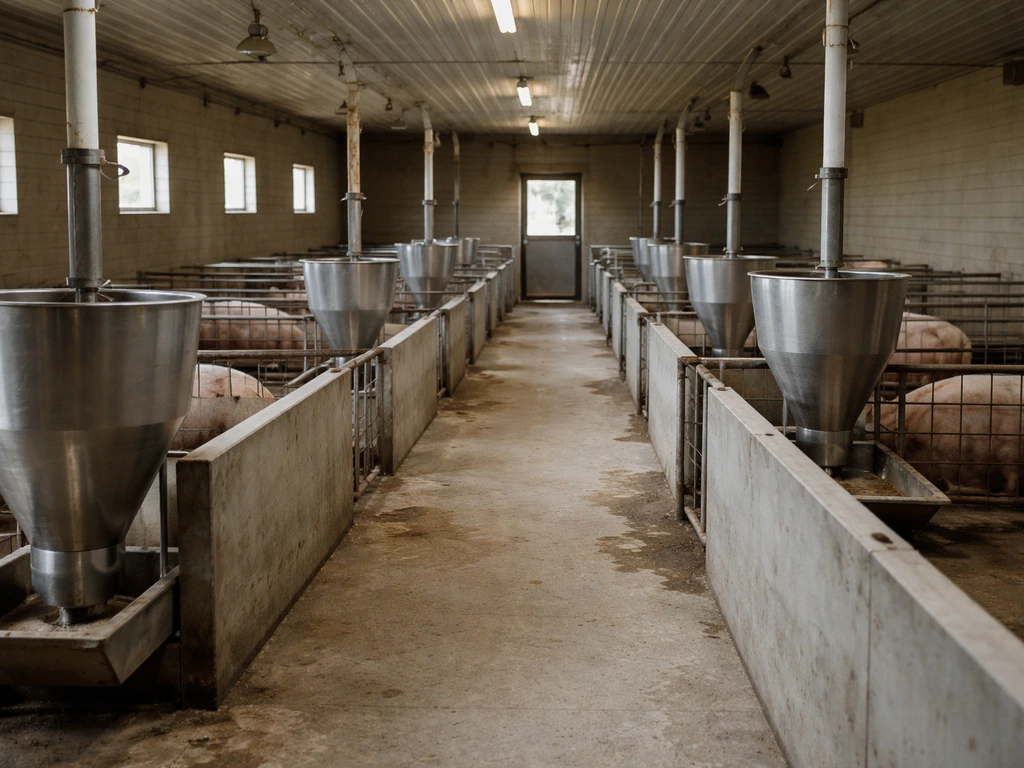
The business Ken and Dave Maschhoff lead today is a long way from what their ancestors started in 1851. When the two brothers joined in the late 1970s, they began scaling hog production aggressively. By 2026, The Maschhoffs operates with more than 130,000 sows across five states, producing millions of market hogs and feeder pigs annually. That puts it firmly in the top tier of U.S. pork producers and on the global scale as well, with the Illinois Business Journal noting a top-10 global ranking by production scale as of 2017.
The company's major income drivers break down into a few categories. Core pork production is the primary engine: raising, finishing, and selling hogs into wholesale and processing channels. The Maschhoffs operates through a network of roughly 350 contract farmers, which gives it scale without owning every facility outright. Beyond production, the company has a feed mill operation near Griggsville, Illinois (which recently went solar, a capital investment that also affects operating costs long-term). Maschhoff Family Foods and the subsidiary Acuity Ag Solutions add additional revenue layers, suggesting diversification into agricultural services and food processing.
The 2011 acquisition of substantially all of NPP LLC's swine production assets, including facilities in Nebraska, Iowa, and South Dakota and approximately 50,000 sows, was a landmark deal that meaningfully expanded the company's footprint. Acquisition terms were never publicly disclosed, but transactions of that scale in the swine industry typically run into the tens of millions of dollars, which signals both the company's financial muscle and the kind of debt that can accompany aggressive growth.
Estimated net worth range and why the number varies
Given everything above, the most defensible estimated range for the Maschhoff family's collective net worth is $500 million to $1.5 billion as of mid-2026. Here's how to think about that spread.
| Scenario | Business Valuation Basis | Estimated Family Net Worth |
|---|---|---|
| Conservative | 0.5x estimated annual revenue (~$600M–$800M), high debt load assumed | $300M–$500M |
| Base case | 1x revenue or 6x EBITDA, moderate debt, full family ownership | $700M–$1B |
| Optimistic | 1.5x revenue or 8x EBITDA, low debt, favorable hog market conditions | $1B–$1.5B+ |
The spread exists because hog market conditions are highly cyclical. When pork prices are strong and feed costs are low, EBITDA margins expand and business valuations rise. In private company valuations and transactions, CBV Institute notes that “blank" rel="noopener noreferrer">EV to EBITDA” is one of the referenced valuation multiples. Northstar Financial Advisory’s 2026 guide on applying public-company multiples for private businesses notes that analysts often apply a discount for lack of marketability, commonly cited in a 15% to 30% range lack of marketability discount (15% to 30%). When the reverse is true, as happened during African Swine Fever disruptions and feed-price spikes in the early 2020s, valuations compress and debt can grow. Since The Maschhoffs produces at scale with 130,000-plus sows, even small per-head margin swings translate into enormous differences in annual earnings and, therefore, business value. Different net worth databases will capture snapshots at different moments in that cycle, which is why you might see wildly different numbers across sites.
Another major variable is how different estimators treat the family vs. individual framing. Some databases may show a net worth figure attributed to 'Ken Maschhoff' specifically, which could represent his personal share of family equity. Others might aggregate all Maschhoff family owners. Neither approach is wrong, but they're not comparable to each other without understanding the methodology behind each figure.
Assets and business holdings breakdown

The Maschhoff wealth picture is almost entirely tied to the operating business and its associated assets rather than a diversified portfolio of public stocks or real estate holdings. Here's what's documented or reasonably inferred.
- The Maschhoffs LLC equity: The core holding, encompassing hog production operations across five states with 130,000+ sows. This is the dominant wealth driver by far.
- Maschhoff Family Foods: A branded food subsidiary that adds processing or value-added pork revenue on top of raw commodity production.
- Acuity Ag Solutions: A subsidiary involved in agricultural technology or services (referenced in a 2022 SDR Ventures transaction), suggesting the family has invested in ag-tech adjacencies.
- Feed mill infrastructure: The Griggsville, Illinois feed mill, now partially solar-powered, is a significant fixed asset. Note that some facilities are leased on triple-net terms (as documented with a Land O'Lakes facility) rather than owned outright, which affects the asset side of the net worth calculation.
- Contract farming network: The Maschhoffs works with roughly 350 independent farmers. These relationships are operational assets but are not owned assets in the traditional sense.
- Personal real estate and other holdings: No large documented personal real estate transactions are publicly on record, but family members of this wealth tier typically hold personal real estate in the region. This is a modest and largely unquantified portion of total net worth.
Liabilities, taxes, and factors that can shift the estimate
Private agribusinesses at this scale carry significant debt as a normal part of operations. The Maschhoffs has financed at least one major acquisition (the 2011 NPP LLC asset purchase), ongoing capital equipment, feed mill upgrades including the solar installation, and facility expansion across five states. None of the specific debt figures are public, but it's reasonable to assume that long-term liabilities run into the hundreds of millions of dollars for a company of this size. That debt is subtracted from enterprise value to get to equity, which then becomes the basis for family net worth. A $1 billion enterprise value with $300 million in net debt produces $700 million in equity, which illustrates why debt assumptions move the needle significantly.
Tax treatment matters too. Because The Maschhoffs is structured as an LLC, profits flow through to the owners as personal income rather than being taxed at the corporate level first. This means the family pays income taxes directly on business earnings each year, which reduces the accumulation of retained wealth relative to a C-corporation structure. Estate planning and family trust structures, common among multi-generational family businesses founded in the 1800s, also affect how wealth is legally held and transferred, potentially spreading the taxable estate across multiple family units.
Commodity market volatility is arguably the biggest single one-off factor. Hog prices, corn prices (a primary feed input), and disease risks like African Swine Fever can dramatically alter profitability in a single year. A bad year in the hog cycle doesn't eliminate the family's wealth, but it can temporarily reduce business cash flow and therefore suppress a market-based valuation of the company. Any net worth estimate taken during a commodity downturn will look materially different from one taken during a peak year.
How to verify, update, and interpret this number responsibly
Because The Maschhoffs is private, there's no annual report or SEC filing you can pull that shows revenues, EBITDA, or debt. But there are several legitimate ways to triangulate and update the estimate over time.
- Track trade press: Meat+Poultry, Farm Progress, Pig Progress, and similar publications regularly cover major agribusiness transactions, expansions, and leadership changes. Any acquisition, divestiture, or major capital project is a signal worth incorporating into valuations.
- Watch USDA and industry reports: National hog inventory data and pork price indices from USDA give you a real-time read on the commodity environment that drives profitability for a company like The Maschhoffs.
- Check Illinois corporate records: The Illinois Secretary of State's business database can confirm the legal status and registered structure of The Maschhoffs LLC, though it won't show financials.
- Look for subsidiary transactions: The 2022 Acuity Ag Solutions transaction with SDR Ventures is an example of a subsidiary deal that provides partial valuation context. Similar deals in the future would do the same.
- Cross-reference multiple net worth databases: Sites like Growjo and Crunchbase provide business-level revenue estimates for private companies. These are themselves estimates, but comparing two or three sources helps identify outliers and gives a more grounded range.
- Apply an explicit disclaimer lens: Any number you see, including the ranges on this page, should be treated as an informed estimate rather than a verified figure. The Maschhoff family has not publicly disclosed personal net worth, and no primary source exists that would allow a precise calculation.
For context within the broader agribusiness and family-business wealth landscape, the Maschhoffs sit in a similar tier to other prominent multi-generational family businesses in the U.S. food production sector. Readers researching similar profiles of family business owners in agriculture may find it useful to compare the methodologies used for figures like those of Harvey Massey or Walter Massey, where private business equity is similarly the dominant wealth driver and the same estimation challenges apply. Rowland Hussey Macy net worth searches often use similarly limited public data, so estimates typically come from business performance, valuation assumptions, and timing. Readers researching similar profiles of family business owners in agriculture may find it useful to compare the methodologies used for figures like those of Harvey Massey or Walter Massey, including Walter Massey net worth, where private business equity is similarly the dominant wealth driver and the same estimation challenges apply. For context, similar valuation challenges also come up when people research Harvey Massey net worth, since those estimates rely on private-business equity assumptions rather than audited public statements.
The bottom line is this: the Maschhoff family is genuinely wealthy by any measure, with a business that operates at a scale few family-owned agribusinesses in the world can match. A collective net worth somewhere between $500 million and $1. The spread exists because hog market conditions are highly cyclical karl massey net worth. 5 billion is the most credible range available today, with the honest caveat that the actual number depends heavily on current market conditions, the company's debt position, and valuation methodology. If you're using this for research, investment context, or general curiosity, that range is the most defensible starting point, and the trade press is your best ongoing source for meaningful updates.
FAQ
Why do different websites show very different versions of the maschhoffs net worth?
Most listings are either (a) Ken Maschhoff’s personal share of the family equity or (b) the combined equity held across Ken, Dave, their spouses, and any other related owners in the LLC and holding structure. These two approaches can easily differ by hundreds of millions, even if the underlying business value is the same.
How do you translate an estimated business value into the maschhoffs net worth?
A reliable approach is to start with business equity (enterprise value minus net debt), then apply an ownership split across the Maschhoff family units. If you cannot confirm ownership percentages, the best you can do is use a range, because a small change in equity ownership can materially move the final net worth estimate.
Does the maschhoffs net worth include money from subsidiaries and related entities or just The Maschhoffs LLC?
Yes. The company is tied to a broader structure that includes operating subsidiaries, so estimates that only count “The Maschhoffs LLC” can understate total family equity. Conversely, estimates that double-count assets or assume all subsidiaries are fully owned can overstate it, especially with contract-farmer arrangements.
Why don’t typical stock-and-real-estate style calculators work well for the maschhoffs net worth?
Because private agribusiness owners often hold wealth in operating equity and debt-funded assets rather than public stock, checking net worth calculators that rely on “public market holdings” can mislead. In this case, the dominant driver is business equity tied to pork production scale, feed operations, and any acquisition-linked assets.
What’s the biggest mistake people make when estimating the maschhoffs net worth?
Debt assumptions are a major swing factor. If you assume net debt is higher than expected, the equity portion (what converts to net worth) drops. If you assume lower net debt, equity rises, which is why two estimates can diverge even when they agree on business size.
Can the maschhoffs net worth change a lot from year to year even if the business is stable?
Not necessarily. A business can have strong earnings but still show a low equity value in a downturn if lenders increase pressure, margins compress, or capex rises. If the estimate is taken during a hog cycle dip or immediately after a large expansion, it may understate the longer-term wealth picture.
How do taxes and estate planning affect what people see as the maschhoffs net worth?
It can affect timing but usually not the underlying range by itself. Tax treatment (pass-through vs corporate) influences how quickly profits become personal disposable income and retained wealth. However, estate planning and ownership structures can shift when assets are recognized as “net worth” for individuals versus held through trusts or other family entities.
How do risks like African Swine Fever or feed-cost spikes influence net worth estimates?
Yes, especially during stress events. Disease disruptions, feed spikes, or contract terms changing can reduce cash flow, make lenders more cautious, and cause equity to reprice. Even if the family retains long-term ownership, a market-implied valuation method will still produce a lower estimate during those periods.
If there is no official disclosure, how can I update the estimate for the maschhoffs net worth over time?
If you want a more current estimate, track trade press items that signal capital intensity and margin pressure, such as expansion announcements, major facility upgrades, financing for acquisitions, or changes to feed costs and pork pricing. Those clues help you update enterprise value and net debt assumptions without needing private financial statements.
How should I interpret the maschhoffs net worth figures from online net worth databases?
You should treat “net worth” sites as starting points, not confirmed valuations. A good check is whether the site explains its method (business-equity based versus asset-based) and whether the number is framed as individual versus family aggregate. If neither is clear, the figure is often not directly comparable to others.